
By: Keith Powers
There is something quietly distinctive about an artist who refuses to abandon the values that first gave him a voice.
For more than three decades, DPB has occupied a distinctive space in American music. Long before Christian hip-hop became an established lane with recognized artists and festival headliners, DPB was already building bridges between gospel conviction and hip-hop culture. His career has taken him from singing with The Brooks Family to sharing stages with artists like Salt-N-Pepa and alongside Christian music figures, including TobyMac and Kirk Franklin. Through every chapter, one thing has remained notably consistent: his music has always pointed back to faith.
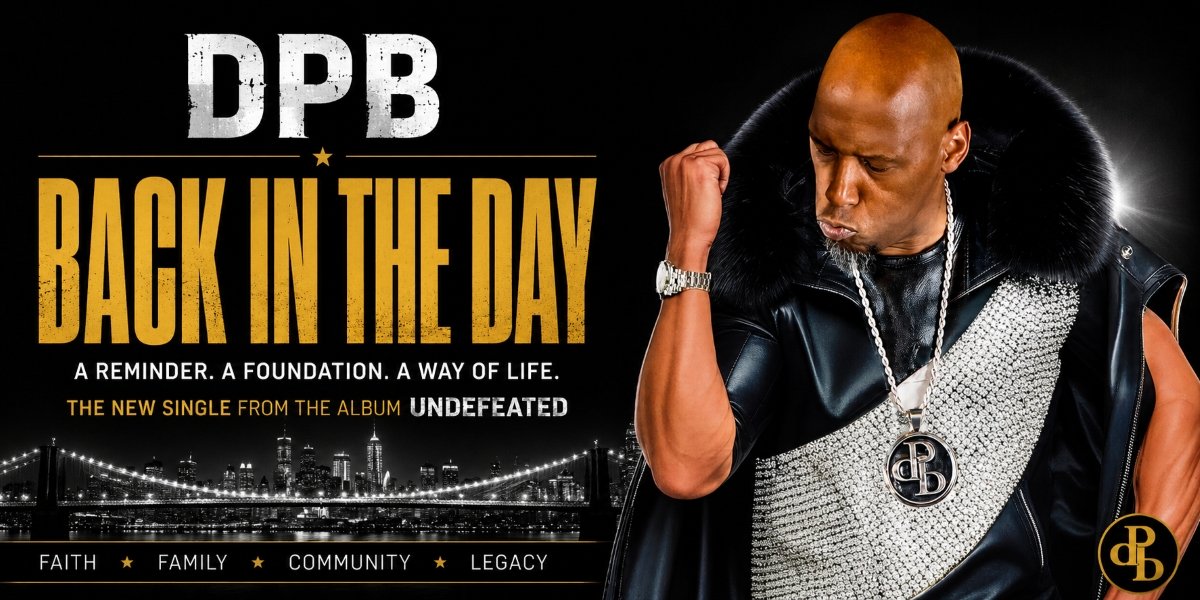
That consistency gives his latest single, “Back in the Day,” an emotional weight that younger artists may spend years trying to develop. This isn’t nostalgia packaged for streaming algorithms. It’s memory shaped by experience.
The song opens with a smile, but not an easy one. DPB immediately places his mother at the center of the story, remembering her praying through the night while God continually “made a way.” In an era when many artists build mythology around excess, DPB builds his around sacrifice. His heroes aren’t celebrities. They’re the women who prayed over him before anyone knew his name.
That decision changes the tone.
Instead of presenting faith as something discovered after success, “Back in the Day” suggests that success itself may have grown from those early spiritual roots. His grandmother’s wisdom, church rehearsals that stretched from Monday through Sunday, and a home where worship wasn’t reserved for Sunday mornings became the foundation of the song. They’re also the foundation of the man.
As the narrative unfolds, DPB shifts from the living room to the neighborhood streets of Nyack, New York. Suddenly, the song widens into something almost cinematic. Block parties. Double Dutch. DJs spinning records. Cookouts. Children played until the streetlights came on. References to Michael Jackson, Lauryn Hill, and Roberta Flack don’t feel like cultural name-dropping; they function as emotional landmarks. They’re reminders that music wasn’t simply entertainment. It was a community.
What’s striking about “Back in the Day” is how naturally DPB refuses to separate faith from culture. At times, conversations about Christian music position spirituality in opposition to everyday life. DPB offers another perspective. The church choir and the neighborhood DJ exist in the same world. Prayer and hip-hop coexist. The sacred isn’t isolated from the street. It walks through it.
That perspective has defined much of DPB’s career.
Throughout more than thirty years in music, he has often resisted the pressure to choose between authenticity and accessibility. Instead, he has crafted records that acknowledge hardship without glorifying it and celebrate victory without losing humility. His latest album, Undefeated, continues that trajectory, functioning as what could be described as a musical memoir. Songs about perseverance, healing, worship, forgiveness, and joy flow together into a larger narrative about surviving life without surrendering faith.
“Back in the Day” may be one of the album’s more personal chapters.
One of its strengths lies in its restraint. DPB doesn’t romanticize the past because it was flawless. He remembers it because it gave him principles that still matter. His longing isn’t for old slang or vintage fashion. It’s for stronger foundations, for families that prayed together, neighborhoods that looked after one another, and communities where spiritual values weren’t considered outdated.
That message feels relevant today.
Hip-hop has long been a genre rooted in memory. From its early days, artists have documented neighborhoods, family histories, political realities, and personal transformation. In that tradition, “Back in the Day” fits comfortably. It tells the truth of one man’s upbringing while inviting listeners to reflect on their own.
Musically, the production stays warm and approachable, allowing the storytelling to remain front and center. DPB delivers his verses with the confidence of someone who no longer seems to feel the need to prove himself. After decades in the business, that confidence seems to come not from ego but from perspective.
There are artists who chase trends, reinventing themselves with each passing season. Then there are artists who suggest that longevity can come from knowing exactly who you are.
DPB belongs in the second category.
With “Back in the Day,” he isn’t simply looking backward. He’s reminding us that strong futures are often built on strong foundations. In doing so, he has created more than an engaging single. He has offered a thoughtful reflection on legacy, faith, and the enduring power of remembering where we come from.