
On Sunday morning, a church can know exactly who it is.
Its leaders know the history. They know the families that have been helped, the ministries that have been built, the lives that have changed, and the vision they believe God has placed in front of them.
By Monday morning, however, someone searching for that same church may encounter something very different.
A website. A Google result. A livestream. A social post. Perhaps an AI-generated answer.
Five minutes of digital evidence can become the public version of something that took decades to build.
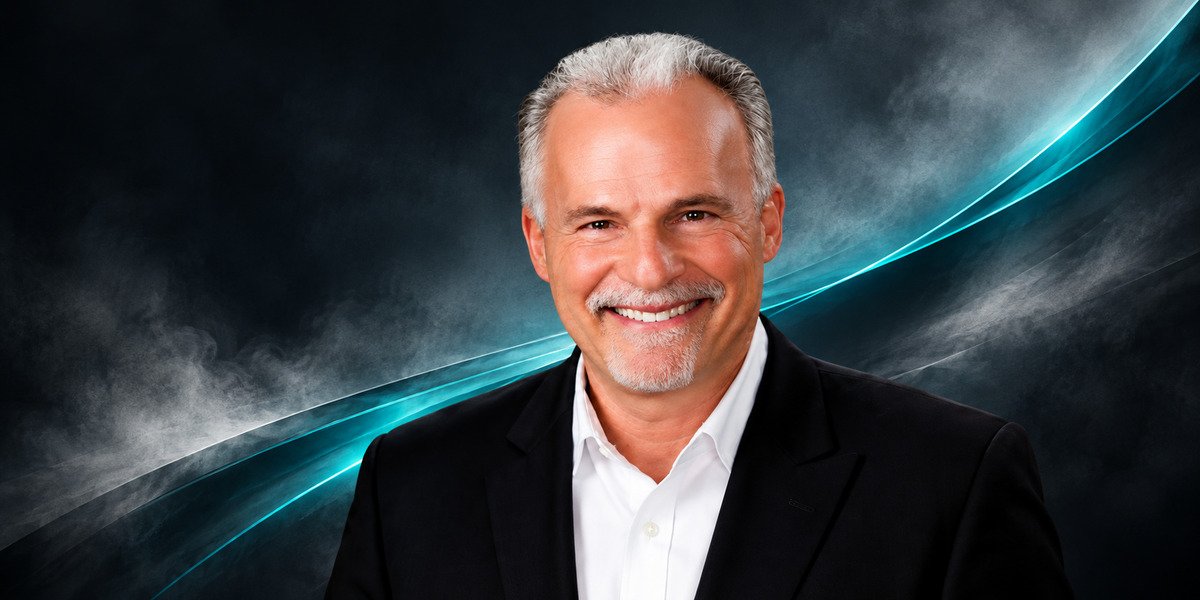
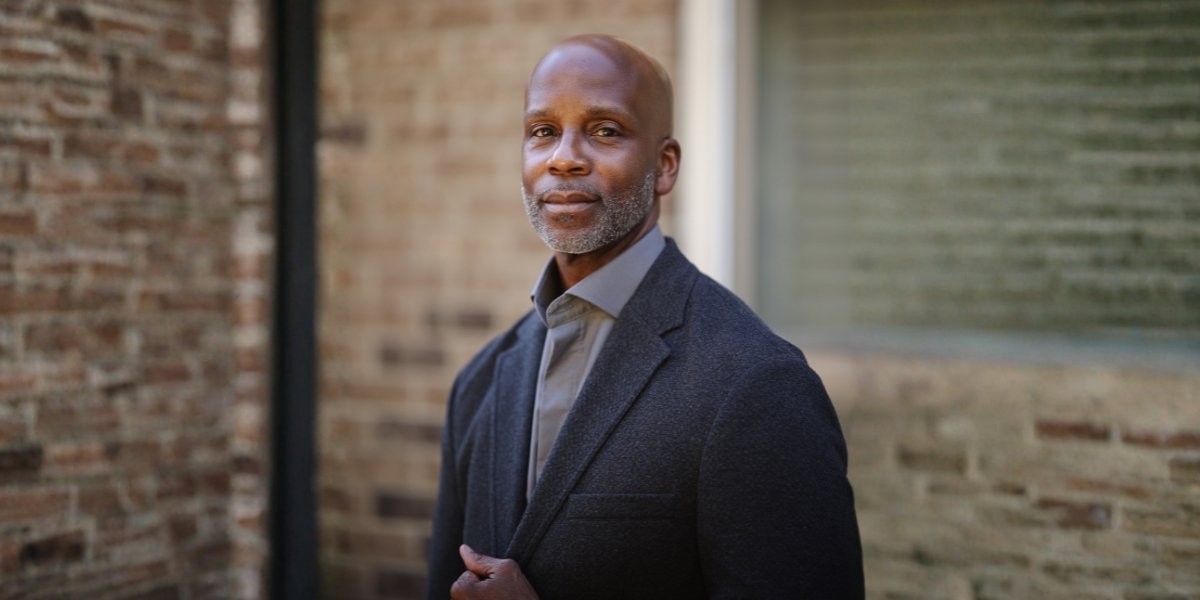
D. Benny Bennafield believes that gap matters more than most organizations realize.
Bennafield is CEO and Chief Storyteller of Datamorrow Solutions and leads its sister firm, Global Faith Solutions, which focuses on churches and faith-based ministries. He has spent nearly three decades working across brand, growth, digital strategy, technology, and cultural strategy. He has also served for more than two decades as an ordained deacon at Word of Faith Family Worship Cathedral.
For much of his career, those experiences occupied different parts of his life.
Eventually, they began pointing toward the same assignment.
Organizations doing important work should not have to become enormous before they can afford to see themselves clearly.
The Problem Was Never a Lack of Vision
Bennafield had spent years around large organizations with access to capabilities many smaller institutions rarely see.
Before making consequential decisions, large organizations could commission research. Benchmark competitors. Study audiences. Test positioning. Bring in experienced strategists. Pressure-test assumptions. Examine market shifts. Spend months understanding the problem before spending millions trying to solve it.
Churches and nonprofits were making consequential decisions, too.
They were making decisions about staffing, fundraising, giving, partnerships, programming, outreach, digital investment, communications, growth, and the future of organizations people depended on.
But they often made those decisions with far less outside intelligence.
As Bennafield’s team came to describe the problem:
The need is not smaller. The access is.
That distinction became the foundation for Datamorrow Solutions and Global Faith Solutions. The two firms bring the same underlying strategic-intelligence discipline to different environments: Datamorrow serves nonprofits and other mission-driven organizations, while Global Faith Solutions applies the work specifically within churches and faith-based ministries.
For Bennafield, the faith work is more than a market opportunity.
It is ministry.
After decades of accumulating professional experience, he began asking a different question about what that experience was ultimately for. If technology and strategic expertise could help some of the country’s largest organizations make better decisions, could those same capabilities be redesigned for institutions whose impact might far exceed the size of their consulting budgets?
The question was familiar.
He Had Seen This Access Gap Before
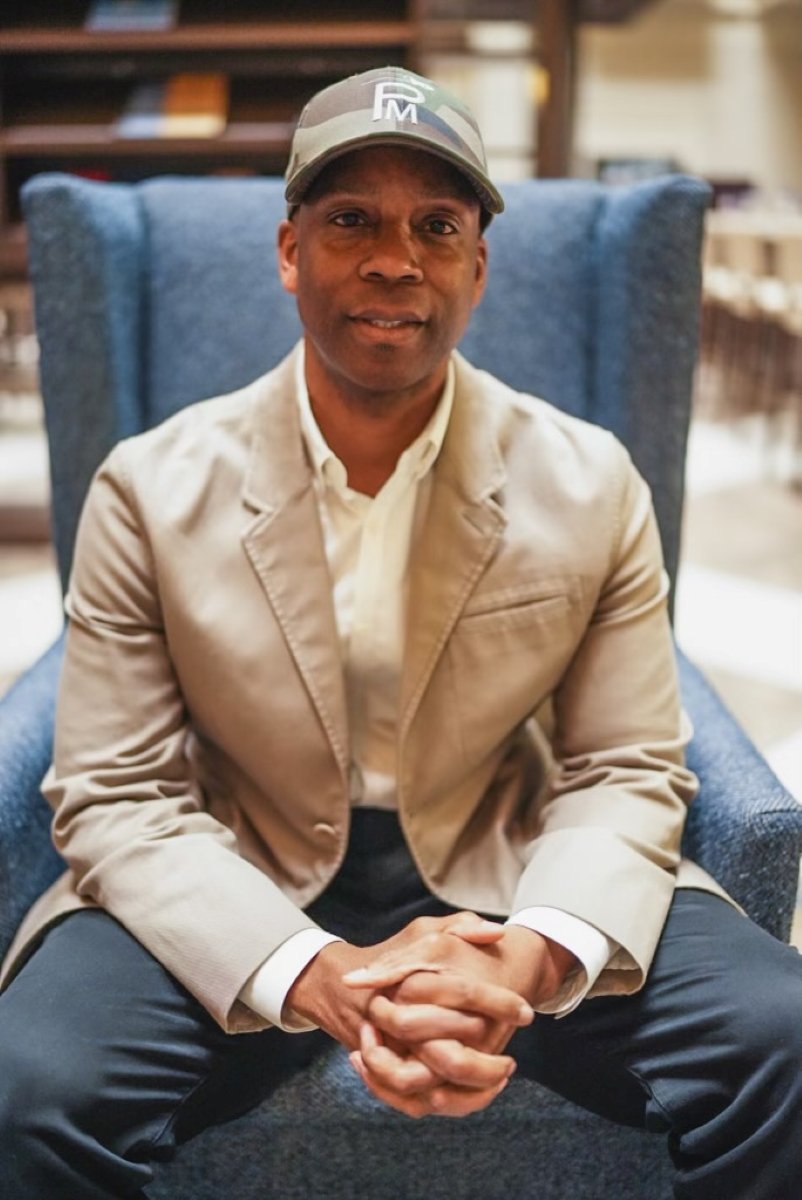
In 2015, Bennafield helped launch Propellant Media around another democratization idea: advanced media strategy and deployment technology should not be reserved for the largest advertisers.
The company went on to become a four-time Inc. 5000 business.
Years later, he saw a similar gap further upstream.
Media technology had become more accessible.
Data had become more accessible.
Artificial intelligence was making information dramatically more accessible.
But experienced strategic judgment remained expensive.
Datamorrow was built to attack that imbalance.
The company uses AI to accelerate research, comparison, synthesis, and pattern recognition, but Bennafield rejects the idea that technology alone is the answer.
One of the company’s central beliefs is deliberately provocative:
AI has democratized answers. It has not democratized judgment.
An artificial intelligence system can produce a polished recommendation. It cannot guarantee that the underlying assumption is right. It can identify what another organization did. It cannot automatically determine whether that precedent belongs in a completely different cultural or operating context.
And it can summarize what is visible about an organization without knowing that the most important finding may be what is missing.
That distinction becomes especially important in churches and nonprofits, where trust is rarely built by information alone.
People have to believe.
They have to understand why the work matters. They have to see themselves somewhere in the story. They have to find enough evidence to trust the organization. And they have to know what to do next.
Datamorrow’s Cultural Intelligence Frameworks® were designed around that human layer, accounting for what an organization communicates and for what another person must understand, feel, believe, verify, and ultimately act upon.
Sometimes the Ministry Is Stronger Than the Story
The distinction became tangible in the company’s early church work.
At Mosaic Church in Mableton, Georgia, the intelligence process surfaced something leadership could easily have misdiagnosed.
The church did not have a ministry-depth problem.
It had a visibility problem.
What God had already built inside the church had outgrown the public infrastructure available to explain it outside the church.
That difference matters.
If leadership diagnoses the ministry as the problem, it may begin changing programs.
If the real problem is that people cannot discover, understand, or navigate what already exists, the investment should go somewhere else.
Mosaic received a roadmap for strengthening its digital presence, organizing its discipleship pathway, improving the visitor experience, and making its care and community-impact ministries easier to find.
At Mount Carmel Baptist Church in Cabot, Arkansas, the findings became concrete enough to affect staffing. Leadership hired someone focused on graphics, publicity, social media, and the web after reviewing the opportunities identified through the work.
The analysis also revealed a subtler audience issue. The church clearly communicated its commitment to children and students, but a young adult encountering the ministry might have more difficulty immediately seeing where he or she belonged.
Those are not cosmetic observations.
They affect belonging.
They affect participation.
And eventually, they can affect the health of the institution itself.
Nonprofit Leaders Recognize the Same Gap
The problem does not stop at the church door.
Small and mid-sized nonprofits can carry extraordinary responsibility while operating without the strategic infrastructure available to much larger organizations.
Delores Druilhet Morton, CEO of Step Up, described what Datamorrow’s work changes for leaders like her:
“The strategic intelligence insights Datamorrow provides helps us, as non-profit leaders, especially small to mid-sized non-profits, to function with the same kind of sophistication as a much larger organization.”
Delores Druilhet Morton CEO | Step Up | suwn.org
Her observation captures an important distinction.
The goal is not to make a smaller organization pretend to be a Fortune 500 company.
The goal is to stop requiring smaller organizations to guess simply because they cannot afford the infrastructure larger organizations use to know.
That can mean understanding how the organization compares with relevant peers before approving a new strategy.
It can mean seeing what a potential donor, funder, volunteer, corporate partner, or church visitor encounters before leadership gets to explain the mission.
It can mean determining whether an organization’s public evidence actually supports what its leaders believe to be true.
And increasingly, it means understanding what machines see.
The New Front Door May Not Be Human
The internet changed how organizations were discovered.
Artificial intelligence is changing who, or what, does the discovering.
Search engines, AI answer systems, crawlers, assistants, and other machine technologies increasingly interpret an organization’s public record before a human being ever arrives at its website.
That raises the stakes for organizations whose stories are already under-told.
A nonprofit may have years of measurable impact, but if that proof is scattered across the internet, machines may struggle to connect it.
A church can have deep ministries for multiple generations, but if its digital architecture does not make those pathways understandable, the public interpretation may be much narrower than the actual ministry.
A community organization may have significant corporate-partnership potential while its public story communicates only that it needs money.
Bennafield calls the public record the organization’s first due-diligence file.
Before the donor meeting, partnership discussion, first visit, board conversation, or funding request, the outside world has already begun deciding what it believes.
That makes visibility more than marketing.
It makes clarity part of the infrastructure.
A Different Kind of Return
There is an interesting symmetry in Bennafield’s story.
His professional career gave him access to technology, corporate strategy, brand building, cultural intelligence, and the kinds of decision-support capabilities sophisticated organizations routinely purchase.
His ministry life kept him close to institutions that often operated without them.
Datamorrow and Global Faith Solutions sit where those two experiences finally meet.
The result is not simply another consulting company using AI.
It is an attempt to redistribute something less visible but enormously consequential:
strategic advantage.
For churches, nonprofits, and other mission-driven organizations, the larger question is not whether they deserve the same budgets as the country’s largest institutions.
They probably never will.
The more useful question is whether they should have access to some of the same intelligence before making decisions that affect the people and communities depending on them.
Bennafield believes they should.
Because some of the organizations carrying the biggest missions are operating with the smallest strategic safety nets.
And when an organization has spent years building something worth believing in, the outside world should not have to guess what it is.
D. Benny Bennafield
CEO/Chief Storyteller
Datamorrow Solutions
404.226.9589
bbennafield@datamorrow.solutions
Datamorrow.solutions
global-faith.solutions