


Savannah State University Approved for First Doctoral Program at a Georgia Public HBCU, With a Fall 2027 Launch Planned
Savannah State University has been approved to develop its first doctoral program, a Doctor of Public Administration. The university says it is the first public HBCU

North Carolina A&T Celebrates the 100th Greatest Homecoming on Earth October 25 to November 1
North Carolina A&T State University marks 100 years of homecoming tradition with the centennial Greatest Homecoming on Earth, running October 25 through November 1, 2026, in

Artist Dorothy I. Burge Honors Black Veteran Freedom Fighters in New Quilt Exhibition at the Chicago Cultural Center
Chicago artist Dorothy I. Burge opens Freedom Fighters on October 2, 2026, a new series of quilts honoring Black veterans whose fight for freedom continued after

FAMU and Hampton Kick Off Homecoming 2026 the Same Week, From The Hill to Pirates Island
FAMU homecoming 2026 and Hampton University homecoming 2026 both run October 18 to 25, putting two of the country’s best-known HBCU celebrations on the same calendar. Florida A&M brings “There’s No Place Like the Hill” to Tallahassee, while Hampton returns with “Ignite the Blue & White” on Pirates Island in

Ford Foundation Grant Delivers $750,000 To 14 HBCU Radio Stations Through The HBCU Radio Preservation Project
The HBCU Radio Preservation Project has received $750,000 from the Ford Foundation, funding that has gone to 14 radio stations at historically Black colleges and universities over the past year. The unrestricted grants support staffing, programming and broadcast infrastructure, and help stations absorb the loss of federal public broadcasting funds.






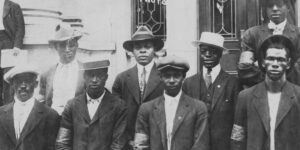
How the Great Migration Reshaped Black America and Built the Cities That Define It Today
Between 1910 and 1970, approximately six million Black Americans left the rural South for cities in the North, Midwest, and West, making the Great Migration one of the largest internal population movements in United States history. In 1910, roughly 90 percent of all Black Americans lived in the South, the majority in rural agricultural areas. By 1970, that share had dropped to just over half, and eight in ten Black Americans lived in metropolitan areas. One in four lived in just five cities: New York, Chicago, Philadelphia, Los Angeles, or Detroit. The migration did not just relocate people. It built new economies, created new cultural movements, generated new political power, and redrew the demographic map of the country in ways that still define American life. Key Takeaways The Great Migration moved roughly six million Black Americans from the rural South to cities across the North, Midwest, and West in two distinct waves: 1910 to 1940 and 1940 to 1970. Between 1910 and 1920 alone, the Black population of New York grew 66 percent, Chicago’s grew 148 percent, Philadelphia’s grew 500 percent, and Detroit’s grew 611 percent. Black-owned businesses across the country jumped from roughly 5,000 to 70,000 during the first wave of migration as new urban population centers created concentrated consumer markets. The migration produced the Harlem Renaissance, transformed Southern blues into Chicago electric blues and jazz, sent the first Black congressman of the 20th century to Washington from Chicago, and laid the demographic groundwork for the civil rights movement. In the second wave, Los Angeles’s Black population grew from 63,700 in 1940 to 763,000 by 1970 as defense industry jobs and West Coast manufacturing drew millions to new destinations beyond the traditional northern corridor. Jim Crow, Sharecropping, and Racial Violence Drove Millions Out of the South The conditions that

Edward Waters University Records Its Largest Fall Enrollment in Two Decades, Approaching the All-Time Record
Edward Waters University, Florida’s first historically Black college and university, closed fall 2026 registration with 1,281 students, the largest student body the Jacksonville institution has

Brooklyn’s West Indian Day Parade Returns September 7 With Carnival Week Programming Spanning Five Days of Caribbean Culture
The West Indian American Day Carnival Parade returns to Eastern Parkway in Crown Heights, Brooklyn, on Labor Day, September 7, closing out a five-day Carnival

Black Business Ownership Doubled From 5% to 11% Between 2019 and 2022 as National Black Business Month Highlights Both Growth and Funding Gaps
Black household business ownership jumped from 5% in 2019 to 11% in 2022, representing the fastest growth rate in three decades, according to the 2026

Shonda Rhimes Renews Netflix Deal for Five More Years, Extending Shondaland’s Streaming Empire Through 2031
Shonda Rhimes and her Shondaland production company renewed their exclusive overall deal with Netflix for five additional years on August 25, 2026, locking in one

BLACK GIRLS ROCK! and Black Promoters Collective Launch BGR! LIVE, With an Arena Tour Planned for Early 2027
BLACK GIRLS ROCK! founder and CEO Beverly Bond and the Black Promoters Collective announced a multi-year partnership on October 14, 2026, to launch BGR! LIVE, a live-entertainment extension of the brand. The first BGR! LIVE arena tour is scheduled to begin in early 2027, putting a 20-year celebration of Black women on the road with Black-owned promoters. Key Takeaways BLACK GIRLS ROCK! and the Black Promoters Collective (BPC) signed a strategic, multi-year partnership to create BGR! LIVE. The first BGR! LIVE arena tour is set to launch in early 2027. BPC is 100% Black-owned and made up of six independent concert promotion and event production companies. BPC says it is the only fully Black-owned live music company on Pollstar’s Global Top 100 Promoters list, where it ranks No. 39. BPC also ranks No. 3 on Pollstar’s global list of urban promoters and producers. Beverly Bond, a DJ, founded BLACK GIRLS ROCK! in 2006 to celebrate the achievements of Black women and girls. BLACK GIRLS ROCK! Takes Its Celebration on the Road For two decades, BLACK GIRLS ROCK! has mostly reached audiences through a televised awards show, a festival, and a nonprofit youth program. BGR! LIVE changes that. The partnership turns the brand’s message into an arena tour, a format that depends on ticket sales, routing, production, and audiences in multiple cities rather than a single broadcast night. Beverly Bond said she was excited to launch BGR! LIVE with a team that has a track record of producing major tours. She said the partnership combines BPC’s touring experience with the audience connection and cultural identity BLACK GIRLS ROCK! has built since 2006. The two sides’ strengths fit together. BLACK GIRLS ROCK! brings a recognized brand, a loyal audience, and a history of honoring Black women across music, film, business, activism, and public life. BPC brings the logistics, venue relationships, and production capacity needed to fill arenas. Black Promoters Collective Brings Black Ownership to the Concert Business The Black Promoters Collective is one of the more significant developments in live entertainment in recent years. It brings together six independent concert promotion and event production companies under one 100% Black-owned structure, with a shared goal of producing culturally relevant live experiences. Its rankings show that the model has reached scale. BPC says it is the only fully Black-owned live music company on Pollstar’s Global Top 100 Promoters list, at No. 39, and it ranks No. 3 among global urban promoters and producers. In an industry largely controlled by a handful of large corporate players, that position matters. BPC called the deal an investment, saying it reflects the collective’s belief in BLACK GIRLS ROCK! and its commitment to building a lasting business together. The company said Bond has built an institution with enduring cultural authority that has helped define how Black women are celebrated. Black Women’s Celebration Moves to Black-Owned Infrastructure The partnership’s significance is about ownership. Black women have long been at the center of American music, as performers, songwriters, and audiences. But

Victoria Monét Releases “Frequency of Love” and Takes the 22-Track Album on a 27-City Tour Starting October 27
Victoria Monét released “Frequency of Love,” her 22-track follow-up to the Grammy-winning “Jaguar II,” on October 2 through Lovett Music and RCA Records. She now

2026 Emmys Draw Renewed Scrutiny After Zero Black Acting Winners at the Primetime Ceremony
The 78th Primetime Emmy Awards, held September 14, 2026, at the Peacock Theater in Los Angeles, produced no Black acting winners across all 10 major

Ayra Starr Releases “Starr Girl” with Features from Wizkid, Rema, and ZAYN in Her Most Globally Ambitious Album Yet
Nigerian singer-songwriter Ayra Starr released “Starr Girl” on August 14 through Mavin Records with Republic Records handling international distribution, delivering a 16-track project that pairs

Ciara Invests $50,000 in Ten Atlanta Youth Organizations Across Music, Film, Fashion, Tech, Sports, and Education
Grammy-winning recording artist, entrepreneur, and Atlanta native Ciara announced a $50,000 investment in ten Atlanta-based youth organizations on the annual Ciara Day, distributing $5,000 to

Father-and-Son Team Marvin and TJ Terrell Acquire Valdosta’s Fin & Feathers Restaurant
Marvin Terrell and his son, Alex “TJ” Terrell, have acquired Fin & Feathers, a restaurant in the Valdosta Mall commercial corridor. The Southern Georgia Black Chambers (SGBC) marked the change of ownership with a ribbon cutting on September 26, 2026. The Terrells are repositioning the restaurant around daytime dining, family meals and business gatherings. Key Takeaways Marvin Terrell, a business acquisition strategist, and his son Alex “TJ” Terrell, the managing operator, now own Fin & Feathers in Valdosta, Georgia. The Southern Georgia Black Chambers held the ribbon cutting for the ownership change on Saturday, September 26, 2026. The Terrells ran the restaurant for several months before the deal formally closed. The new plan focuses on daytime food service, corporate lunches, weekend family dining and private events. Fin & Feathers joined the SGBC at an Executive Level membership that runs through December 2027. SGBC president and CEO H. DeWayne Johnson presented the deal as an example of Black business growth through acquisition, not only startups. A Family Ownership Story Built on Acquisition Most stories about Black entrepreneurship focus on founders starting from nothing. The Terrell family took a different route: they bought an established restaurant with an existing location, customers and

Meharry Medical College Wins $250,000 Grant to Build a Postpartum Maternal Mental Health Care Model
Meharry Medical College’s School of Global Health in Nashville has received a $250,000 planning grant from the Global Ministries of the United Methodist Church. With the funding, a team led by Dr. Lynn Todman will design a model of care for maternal mental health in the months after childbirth, as the historically Black institution marks its 150th year. Key Takeaways Dr. Lynn Todman, Professor and Chair of the Department of Population Health at Meharry’s School of Global Health, leads the initiative. Roughly one-third of pregnancy-related deaths in the United States happen after the baby is born, during the postpartum period. The care model will connect four areas: clinical practice, institutional processes, community-based initiatives, and advocacy and policy. Eight School of Global Health Research Assistant Interns will gain hands-on experience through the project, from community assessments to model development. The work builds on Meharry’s HEART program, which promotes heart health and healthy longevity in San Bernardino, California; Nashville, Tennessee; and Detroit, Michigan. A Focus on the Months After Birth Much of the public conversation about maternal health centers on pregnancy and delivery. Meharry Medical College’s new initiative looks at the stretch that often gets less attention: the weeks and months after

Morehouse College Opens Multimedia Center to Grow a Pipeline of Black Journalists and Storytellers
Morehouse College opened the Morehouse Multimedia Center on September 23, 2026, giving students at the historically Black college for men a professional studio to train as journalists, broadcasters, podcasters and filmmakers. Backed by Michael Jordan and Jordan Brand, the center pairs about $250,000 in equipment with a curriculum focused on sports, culture and social justice. Key Takeaways The Morehouse Multimedia Center is based in Brawley Hall and operates within the college’s Journalism in Sports, Culture, and Social Justice department. The facility includes a modular production studio, editing bays and roughly $250,000 in professional-grade equipment. Michael Jordan and Jordan Brand committed more than $1 million to Morehouse in 2021 for scholarships and journalism-related programming. Morehouse launched its journalism major in 2022, making the center the practical home for a program that is only four years old. Emani Saucier serves as the center’s inaugural director and co-founder, and Mikki Harris chairs the journalism department. Building the Storytellers Who Shape the Narrative Who tells a community’s story shapes how that community is seen. For decades, coverage of Black life in America has too often been written from the outside, with Black journalists underrepresented in newsrooms, broadcast booths and editing suites. The Morehouse Multimedia

North Carolina A&T Enrolls Record 3,214 Member Freshman Class and Extends Consecutive Growth Streak to 13 Years
North Carolina Agricultural and Technical State University has enrolled the largest freshman class in its 135-year history, with 3,214 first-year students joining an estimated 15,700 total undergraduate and graduate students for the fall 2026 semester. The enrollment figure extends North Carolina A&T’s uninterrupted growth streak to 13 consecutive years and widens the university’s position as the largest historically Black college or university in the United States. The incoming class arrived at the East Greensboro campus with an average high school GPA of approximately 3.7, a credential profile that reflects the university’s sustained ability to grow enrollment while maintaining academic selectivity. Key Takeaways North Carolina A&T’s fall 2026 enrollment of approximately 15,700 students follows last year’s 15,275, when the university became the first HBCU in history to surpass 15,000 students. The record freshman class of 3,214 students surpasses last year’s 3,021 and arrives with an average GPA of approximately 3.7. The university’s first-year retention rate reached 81.2% during the 2025-2026 academic year, the highest in institutional history. More than 3,200 students graduated from North Carolina A&T in 2025-2026, marking the largest graduating class the university has ever produced. North Carolina A&T was recently ranked the nation’s number one public HBCU by

Orange Blossom Classic Brings FAMU and Defending National Champion South Carolina State to Miami Gardens for 52nd Edition
The 52nd edition of the Orange Blossom Classic will bring the Florida A&M Rattlers and the defending HBCU national champion South Carolina State Bulldogs to Hard Rock Stadium in Miami Gardens on Sunday, September 6, with kickoff set for 3 PM ET. The matchup anchors a multi-day weekend of HBCU cultural programming, career development, and community events that have become central to the Orange Blossom Classic’s identity since the game’s return to South Florida in 2021 after a 43-year absence. Key Takeaways The 52nd Orange Blossom Classic pits Florida A&M against defending Celebration Bowl champion South Carolina State at Hard Rock Stadium on Sunday, September 6, at 3 PM ET South Carolina State enters the game under head coach Chennis Berry with back-to-back MEAC championships and an undefeated conference record over two seasons; the Bulldogs won the 2025 Celebration Bowl 40–38 in four overtimes against Prairie View A&M South Carolina State is making its first OBC appearance since 1973, when the Bulldogs lost 23–12 to FAMU under legendary head coach Willie Jeffries The pregame Fan Fest, free with a game ticket, features a live performance by Trick Daddy and Trina at Hard Rock Stadium’s South Side Fountain Plaza Weekend programming

Delta Air Lines Invests $35,000 in KIPP Atlanta Schools to Strengthen College and Career Pathways for Black Scholars
KIPP Atlanta Schools, a tuition-free charter network serving more than 4,500 students across Atlanta and East Point, announced a $35,000 grant from Delta Air Lines to expand college advising and career readiness programming for scholars in kindergarten through 12th grade. The grant, announced August 24, funds two of the network’s signature initiatives: KIPP Forward, which provides individualized postsecondary planning and career support for students and alumni, and Best of KIPP, a series of academic competitions, arts showcases, and global enrichment experiences designed to celebrate scholar achievement. The investment extends a partnership between Atlanta’s hometown airline and the charter network that has lasted more than a decade and connected hundreds of students directly to aviation careers. Key Takeaways The $35,000 grant strengthens two programs: KIPP Forward, which supports more than 2,000 alumni through college advising, career planning, internships, and job-shadowing, and Best of KIPP, which includes academic competitions, performing arts events, and a global immersion experience in Nairobi, Kenya. KIPP Atlanta Schools operates nine tuition-free charter schools serving more than 4,500 students in kindergarten through 12th grade in the cities of Atlanta and East Point, in partnership with Atlanta Public Schools and Fulton County Schools. Delta Air Lines has partnered with