

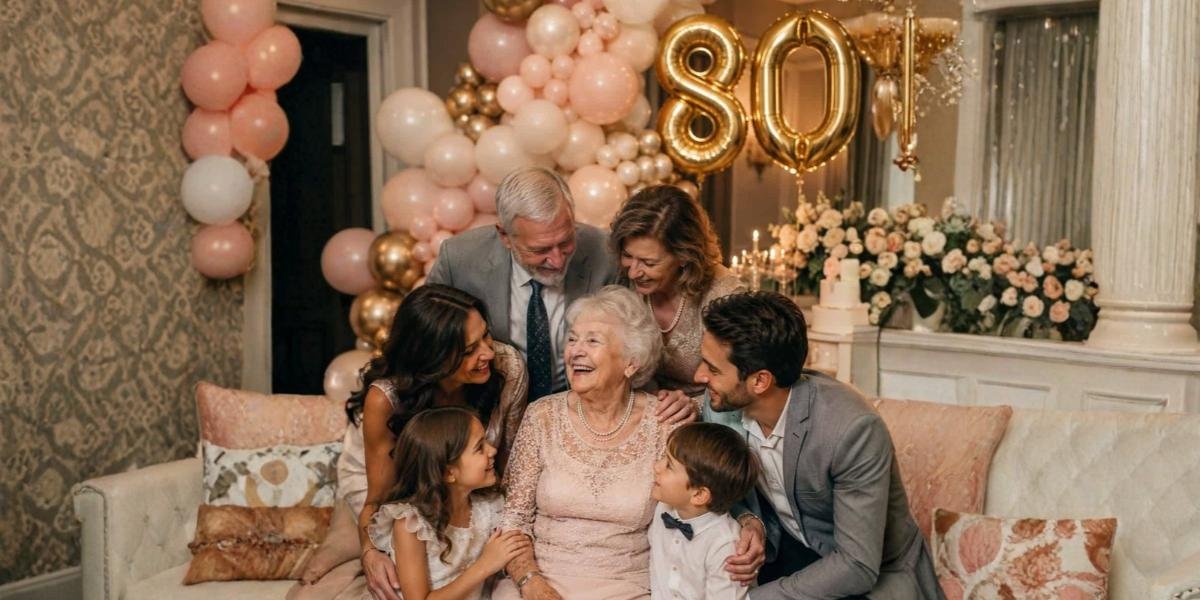
(Unified balloon installation designed for multigenerational birthday party decor spanning a first birthday and an 80th)
Why One Room Has to Hold Two Very Different Milestones at Once
A family sits down to plan one afternoon that somehow has to hold two milestones at once, a great-grandchild’s first birthday and a grandparent’s 80th, in the same room, on the same day. Neither instinct that usually kicks in quite fits. A nursery-bright, pastel-and-numbers theme feels wrong for the elder being honored. A formal, subdued palette built for an 80th feels wrong for a child who’s just learning to walk. That tension is a genuinely different design problem than planning for either milestone alone, and it’s one more families are running into as multigenerational birthday party decor becomes less of a niche request. It isn’t really a scheduling problem or a guest-list problem. It’s a design problem, specifically about how one room can visually hold two very different life stages without shortchanging either. And most joint birthday party ideas circulating online don’t actually solve that, they just split the difference. The result usually satisfies neither generation completely.
Why Splitting the Room in Half Usually Backfires
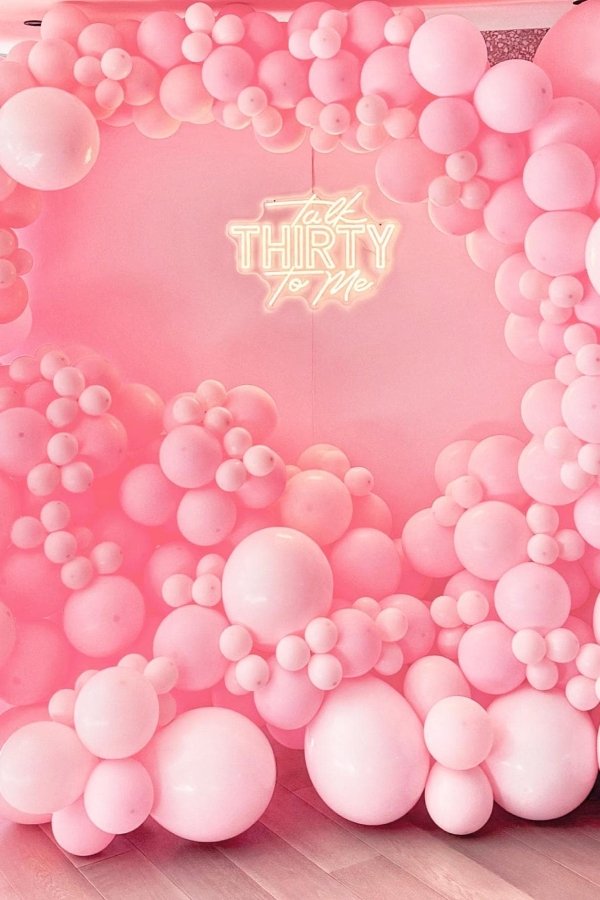
The instinct to solve this by zoning the room, pastel balloons and a number-one garland on one side, elegant golds and a formal arch on the other, feels like a safe compromise. But in practice it tends to do the opposite. A room visibly split into two zones reads as two parties sharing a floor plan, not one family milestone celebration everyone is actually part of. Sean Edwards, Founder of The Balloon Guy, has seen this before. “When you zone a room by age, you’re telling people where they belong in it,” Edwards said. “That’s the opposite of what a shared celebration is supposed to do.” One multigenerational-event resource puts it simply, yet the generations have much to offer each other, and a room that visually separates them works against that point instead of supporting it. The fix isn’t compromise. It’s a design built from the start to hold both, not divide them. That’s the whole shift in thinking families are starting to make.
How a Shared Design Actually Gets Built
A genuinely shared birthday celebration design starts with one dominant palette, not two competing ones, and everything else gets built around it. One color-theory resource explains the underlying logic. Most professional designers follow a 60-30-10 rule: sixty percent of the room’s visual field is covered by a dominant color, thirty percent by a secondary color, and ten percent by an accent. That same ratio works just as well for a shared milestone room. A warm, neutral dominant tone reads as elegant enough for an 80th and soft enough for a first birthday. Texture does similar work. A mix of matte and glossy finishes in the same tone family reads as more considered than an all-glossy or all-matte room. The Balloon Guy, a Los Angeles studio that designs installations built around one full room rather than two separate corners, applies that same logic to the balloon work specifically. So a single anchor installation, an arch or an organic garland in that dominant tone, holds the center of the room. Even the ribbon matters. Smaller, specific touches get layered in from there, a number-one detail near the baby’s spot, gold accents near the elder’s seat, without ever becoming a second theme competing for the room.
What Makes the Room Read as One Celebration, Not Two

The difference between a room that reads as unified and one that reads as a compromise usually comes down to scale and restraint, not the color choices themselves. A dominant installation sized to actually anchor the whole room, not just one corner of it, does more work than any accent color ever could. Lighting reinforces that same anchor point instead of competing with it. Edwards has seen what happens when that scale gets skipped. “People sometimes shrink the shared piece down so it doesn’t compete with the individual touches,” Edwards said. “But that’s backwards. The shared piece is what makes the room feel like one celebration, so it needs to be the biggest thing in it.” Personalized details still matter, but they work as accents layered onto that shared foundation, not as a second competing statement. So the effort spent on that dominant piece is rarely wasted. Get that right, and nobody reads the room as two separate parties. They read it as one family, celebrating together, on purpose.
What a Shared Celebration Design Says About Honoring Family Across Generations
None of this is really a compromise between two milestones, and it was never meant to be one. It’s a single design built from the start to genuinely hold both, a first birthday and an 80th, in equal measure. That distinction matters more than most families realize going in. So that’s worth asking a decorator directly, how would one installation and one palette actually be built to flatter both ends of the age range, rather than defaulting to two separate zones. Edwards trained at the California Institute of the Arts, and that background shows up less in any single balloon and more in how deliberately a whole room gets built to hold two very different visual languages as one. A room where a great-grandchild’s first birthday and a grandparent’s 80th genuinely share the same design is usually a deliberate one. Not a divided room, but one where somebody thought about the whole family before they thought about either milestone alone.