
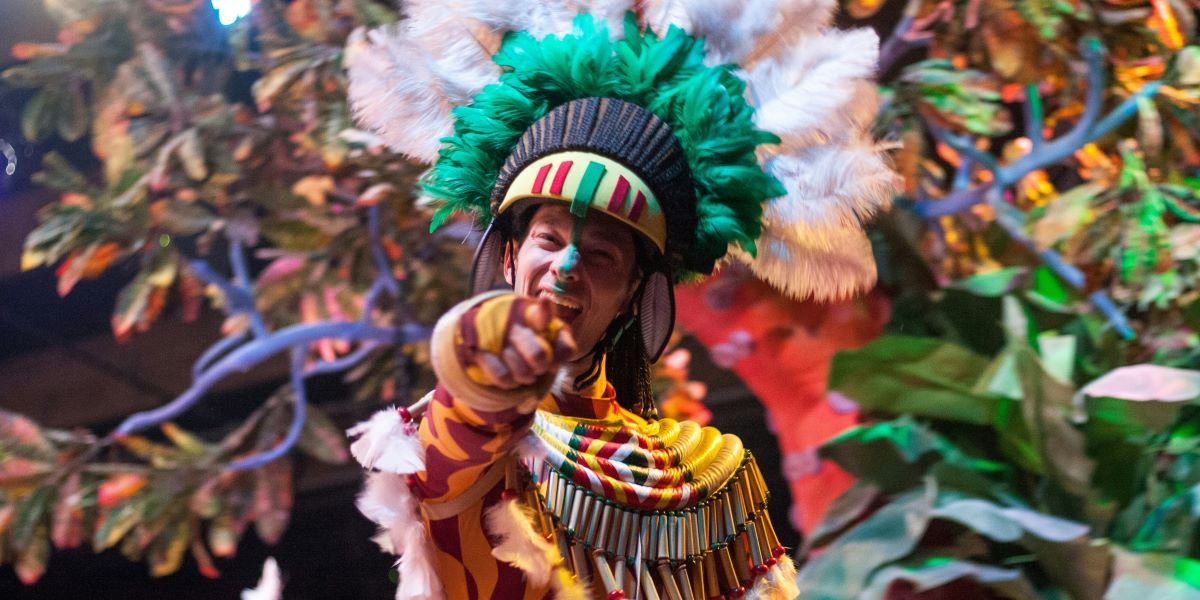
The West Indian American Day Carnival Parade returns to Eastern Parkway in Crown Heights, Brooklyn, on Labor Day, September 7, closing out a five-day Carnival Week that begins September 3 with evening programming at the Brooklyn Museum and builds through the New York Panorama steel pan competition, Junior Carnival, and Soca Fest before the main parade fills the parkway with masquerade bands, calypso, soca, and reggae music, and Caribbean food vendors representing nations across the Caribbean diaspora. The celebration, organized by the West Indian American Day Carnival Association, draws an estimated one to three million spectators and participants each year, making it one of the largest cultural events in the Western Hemisphere and a defining fixture of Brooklyn’s identity as a center of Caribbean life in the United States.
Key Takeaways
- The West Indian Day Parade is scheduled for Labor Day, Monday, September 7, 2026, on Eastern Parkway in Crown Heights, Brooklyn, with the parade traditionally traveling from the area near Utica Avenue toward Grand Army Plaza.
- Carnival Week begins Thursday, September 3, with Blocko Mania at the Brooklyn Museum, followed by Soca Fest on Friday, Junior Carnival and the New York Panorama steel pan competition on Saturday, and the main parade on Monday.
- The New York Panorama, held Saturday evening at the Brooklyn Museum, is the largest steel pan competition in North America, bringing steel bands together to compete for the annual championship title.
- The celebration traces its roots to the 1930s, when Jessie Wardell organized Caribbean Carnival costume parties in Harlem, before Trinidadian immigrant Rufus Goring brought the tradition to Brooklyn in the 1960s.
- The parade is free to attend and watch, with food vendors, masquerade performers, and cultural programming spread along the Eastern Parkway route throughout the day.
Carnival Week Builds From Brooklyn Museum Events to the Labor Day Parade
The week-long programming arc that leads into the main parade is designed to give the celebration room to unfold across multiple formats and audiences rather than compressing everything into a single day. WIADCA has scheduled five days of events that move from nighttime music and cultural programming to daytime youth activities and competitive performance before the parade itself anchors the holiday.
Thursday, September 3, opens with Blocko Mania at the Brooklyn Museum, running from 7 p.m. to 1 a.m. The event functions as the week’s cultural kickoff, drawing early arrivals and setting the tone for the days ahead. Friday, September 4, brings Soca Fest, a music festival at the Brooklyn Museum that runs from 8 p.m. to 3 a.m. and centers the soca music tradition that has become one of the defining sounds of Caribbean Carnival celebrations worldwide.
Saturday, September 5, carries a double program. The daytime belongs to Youth Fest and Junior Carnival, which puts the next generation of masquerade artists, dancers, and performers on the route. The Junior Carnival parade is scheduled to assemble at St. John’s Place and Kingston Avenue at 9 a.m. That evening, the Brooklyn Museum hosts the New York Panorama, the largest steel pan competition in North America. Gates open at 6 p.m. with the competition beginning at 7 p.m. Steel bands from across the New York Caribbean community compete for the championship title in a format that has been a centerpiece of Carnival Week for decades.
The main parade follows on Monday, September 7. WIADCA had not posted an official 2026 start time, confirmed route, or street closure plan as of late August, but the parade traditionally travels along Eastern Parkway through Crown Heights, with the route running approximately 1.3 miles from the staging area near Buffalo Avenue to its conclusion at Prospect Park West near Grand Army Plaza.
The Parade Carries a Cultural History That Stretches Back to 1930s Harlem
The roots of what is now the West Indian Day Parade reach back to the 1930s, when a woman named Jessie Wardell and a circle of friends began organizing Caribbean Carnival costume parties in Harlem. Those gatherings, held indoors and rooted in the masquerade traditions of Trinidad and Tobago’s Carnival, were among the earliest organized expressions of Caribbean cultural celebration in New York City. By the 1940s, the festivities had expanded into street-level activity, carrying the music and costumes out of ballrooms and into public space.
The celebration moved to Brooklyn in the 1960s when Trinidadian immigrant Rufus Goring brought the Carnival tradition to the borough, establishing it along Eastern Parkway in Crown Heights, where a concentrated Caribbean population had been growing since the mid-twentieth century. Carlos Lezama became president of WIADCA in 1967 and led the organization for decades, shaping the modern structure of the event and building the institutional framework that allows a celebration of this scale to operate annually on one of Brooklyn’s main thoroughfares.
Eastern Parkway itself carries historical weight that predates the parade. Designed by Frederick Law Olmsted and Calvert Vaux in 1870, the boulevard was the first parkway built anywhere in the world, originally conceived as a tree-lined promenade connecting Prospect Park to the surrounding neighborhoods. On Labor Day, that same infrastructure transforms into the setting for a cultural celebration that draws participants and spectators from Caribbean communities across the United States, Canada, and the islands themselves.
“Mas” Bands Anchor the Parade’s Visual and Cultural Identity
The masquerade tradition, referred to as “mas,” is the visual backbone of the West Indian Day Parade. Mas bands are organized groups of performers who design and construct elaborate costumes around annual themes, assembling outfits built from feathers, sequins, beadwork, fabric, and sculptural elements that can take months to produce. The tradition has roots in African folklore, colonial-era emancipation celebrations, and the layered cultural history of the Caribbean islands, where Carnival evolved as a space for creative expression, social commentary, and collective identity.
Each mas band moves through the parade route as a coordinated unit, with performers wearing costumes that range from individually crafted pieces to large-scale wearable structures that require engineering as much as artistry. The bands are accompanied by music trucks carrying sound systems that play soca, calypso, and reggae, and the interplay between the visual spectacle of the costumes and the driving rhythm of the music creates the atmosphere that distinguishes Caribbean Carnival from any other parade format.
For the Brooklyn Caribbean community, mas is not performance in the commercial sense. Participating in a band, designing a costume, and walking the route are acts of cultural continuity that connect the diaspora in Crown Heights to the Carnival traditions of Trinidad and Tobago, Jamaica, Barbados, Haiti, Guyana, Saint Lucia, Dominica, and the broader Caribbean. The parade exists because those traditions traveled with the people who carried them, and the scale of the event reflects the size and vitality of the community that sustains it.
Crown Heights Businesses and Food Vendors Build Their Year Around the Weekend
The economic dimension of the West Indian Day Parade is significant for Crown Heights and the surrounding Brooklyn neighborhoods. Food vendors line the parade route selling Caribbean dishes that represent the culinary traditions of every nation in the parade: Jamaican jerk chicken, Trinidadian roti and doubles, Bajan fish cakes, Haitian griot, Guyanese pholourie, and dozens of other preparations that are available on this scale only once a year. For many of these vendors, the Labor Day weekend represents the single largest sales opportunity on the calendar.
Local businesses along and near Eastern Parkway also benefit from the foot traffic that the parade generates. Restaurants, shops, and service businesses in Crown Heights see a concentration of visitors that no other event delivers, and some businesses plan their inventory, staffing, and marketing around the weekend months in advance. The parade’s economic impact extends beyond the route itself, reaching into the surrounding commercial corridors and neighborhoods where visitors eat, shop, and spend time before and after the main event.
The celebration also creates visibility for Caribbean-owned businesses and entrepreneurs who operate year-round in Crown Heights and across Brooklyn. The parade weekend functions as a natural showcase for the neighborhood’s Caribbean business community, drawing attention to establishments and vendors that serve the local population throughout the year but rarely receive the concentrated exposure that a million-plus-visitor event provides.
Transit and Planning Details for September 7 Are Still Pending
WIADCA and New York City officials had not released the full 2026 street closure plan, official start time, or transit and security details as of late August. In prior years, the city has posted the main parade at approximately 10 a.m. to 6 p.m. on Eastern Parkway, with J’Ouvert, the traditional predawn celebration, running from approximately 6 to 11 a.m. that same morning. J’Ouvert is a separate event from the main parade, rooted in the pre-dawn Carnival tradition of Trinidad and Tobago, and carries its own programming, security, and cultural significance.
Public transit is expected to be the most practical way to reach the parade area once the city releases its closure plan. Eastern Parkway is served by multiple subway lines, and the MTA typically adjusts service to accommodate the volume of riders traveling to and from Crown Heights on Labor Day. The parade is free to attend, with no ticketing or reservation required. Spectators can position themselves anywhere along the Eastern Parkway route.
Event details and schedule updates are posted through WIADCA’s official channels at wiadcacarnival.org. NYC Tourism also maintains a listing for the event with confirmed dates and general information for visitors traveling to New York for the celebration.
FAQs
When is the 2026 West Indian Day Parade in Brooklyn?
The main parade is scheduled for Labor Day, Monday, September 7, 2026, on Eastern Parkway in Crown Heights, Brooklyn. Carnival Week events begin Thursday, September 3, with programming at the Brooklyn Museum.
What events happen during Carnival Week before the parade?
Carnival Week includes Blocko Mania on Thursday evening, Soca Fest on Friday night, Youth Fest and Junior Carnival on Saturday morning, and the New York Panorama steel pan competition on Saturday evening, all at or near the Brooklyn Museum. The main parade follows on Monday.
Is the West Indian Day Parade free to attend?
The parade is free to watch from anywhere along the Eastern Parkway route. No tickets or reservations are required for spectators. Some Carnival Week events at the Brooklyn Museum may have separate admission.
What is J’Ouvert and when does it happen?
J’Ouvert is a predawn celebration rooted in Trinidad and Tobago’s Carnival tradition that traditionally takes place early on Labor Day morning before the main parade. In prior years, J’Ouvert has run from approximately 6 to 11 a.m. Official 2026 timing had not been confirmed as of late August.
Where can visitors find the 2026 parade route and schedule?
WIADCA posts event details, schedules, and route information through its official website at wiadcacarnival.org. NYC Tourism also maintains a listing for the event with confirmed dates and general visitor information.