

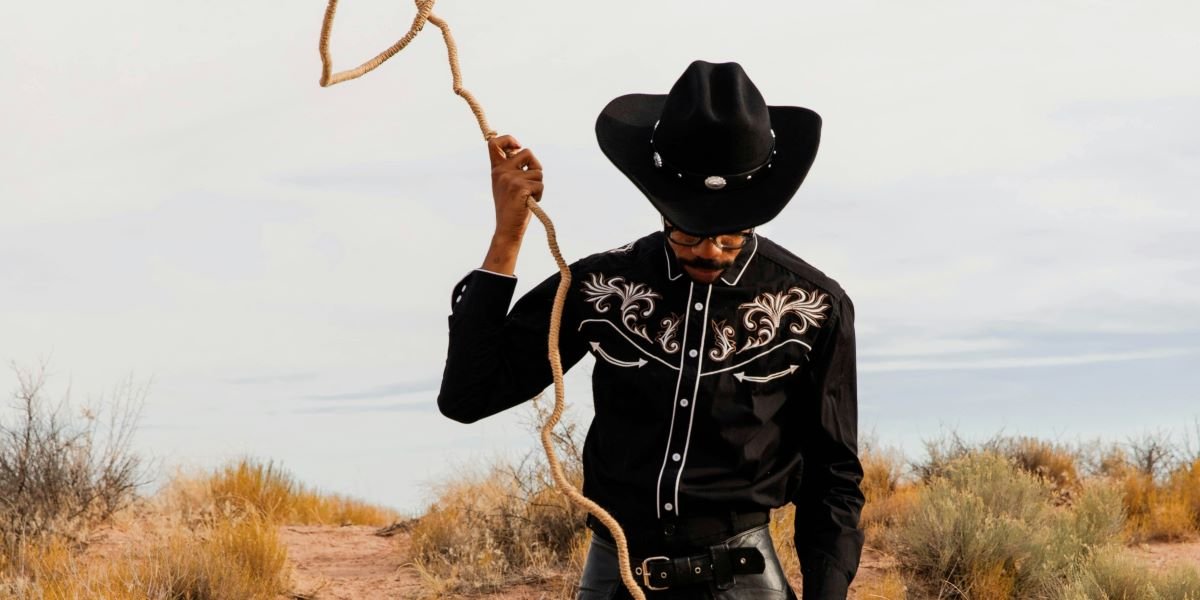
The cowboy is one of America’s most enduring symbols, the rugged, horseback-riding figure of open plains and cattle drives. In the popular imagination, shaped by a century of films, dime novels, and television, that figure is almost always white. The historical record tells a different story. Historians estimate that up to one in four cowboys during the great cattle-drive era were Black, a presence so substantial that the modern myth amounts to a deliberate erasure of the people who helped build the American West.
Freedom Found on the Open Range
The story of the Black cowboy begins with emancipation. When the Civil War ended in 1865, many formerly enslaved men left the South in large numbers, seeking a living and a measure of independence on the wild, roaming plains. A significant number already had the skills the work demanded. In Texas, cattle country since its colonization by Spain in the 1500s, enslaved people had long handled livestock, breaking horses, herding cattle, and working the range. Those skills became valuable currency after the war.
The open range offered something rare for Black men in nineteenth-century America: autonomy. The work was brutal, dangerous, lonely, and poorly paid, which is part of why it was open to men excluded from better-compensated trades. On a cattle drive that could stretch a thousand miles, survival depended on competence rather than pedigree, and the trail offered a degree of equality and self-determination that was almost unheard of elsewhere in the country at the time. For a formerly enslaved man, becoming a cowboy was a path to a kind of freedom the South had never allowed.
The Numbers Behind the Myth
Pinning down exact figures is difficult, but the scholarly consensus is striking. Historians estimate that between 20 and 25 percent of the cowboys who went up the trail during the golden age of the cattle drives, roughly 1866 to 1886, were Black, amounting to at least 5,000 individuals. A 2017 Smithsonian Magazine article by Katie Nodjimbadem summarized the finding plainly in its subtitle: one in four cowboys was Black, so why aren’t they more present in popular culture?
The diversity ran deeper still. Beyond Black cowhands, a large share of the workforce was Mexican or Mexican-American, with Native American cowboys riding the range as well. By some estimates, when all groups are counted, white cowboys were a minority of the total in regions like Texas. The all-white cast of the typical Western, in other words, is closer to fantasy than to history.
Names the History Books Left Out
The Black cowboy was not an anonymous figure but produced documented legends. Nat Love, born into slavery in Tennessee, became one of the most celebrated cowboys of his era and published a widely read autobiography recounting his exploits on the range. Bose Ikard rode with the famed cattleman Charles Goodnight, who trusted him with the outfit’s money and later honored him with a headstone; Ikard is widely seen as an inspiration for a character in the novel Lonesome Dove. Bill Pickett, a rodeo star, is credited with inventing the technique of steer wrestling and became a marquee performer in Wild West shows. These were not marginal figures in their day. Their skill and reputation were well known to the people who watched them work.
How They Were “Politely Deleted”
If Black cowboys were renowned in the 1800s, their disappearance from the record was a later act of cultural editing. As the cowboy became a national icon through fiction and film in the twentieth century, the industry that mythologized him whitewashed him. The historian Tricia Martineau Wagner, in her book on the subject, quotes a descendant of a Black cowboy who captured the dynamic with precision: their families, he noted, did not write the books or produce the movies, “so we were politely deleted.”
Some scholars and cultural figures argue the erasure is embedded even in the language. They point out that the term “cowboy” was often applied to Black cattle workers while their white counterparts were called “cowhands” or “cattlemen,” reflecting the racialized use of “boy” to diminish Black men. The etymology is debated, but the broader pattern of omission is not.
The work of reclamation is now underway. Black cowboy associations, from Oakland to Texas, keep the tradition alive through parades, rodeos, and education, and a recent wave of cultural attention has begun to restore these riders to the story. The correction matters because it is not a footnote. Restoring the Black cowboy revises the origin myth of one of America’s defining figures, replacing a narrowed legend with a fuller, truer history, one in which the freedom and grit the cowboy represents belonged, in large measure, to the formerly enslaved men who rode the range to claim it.