

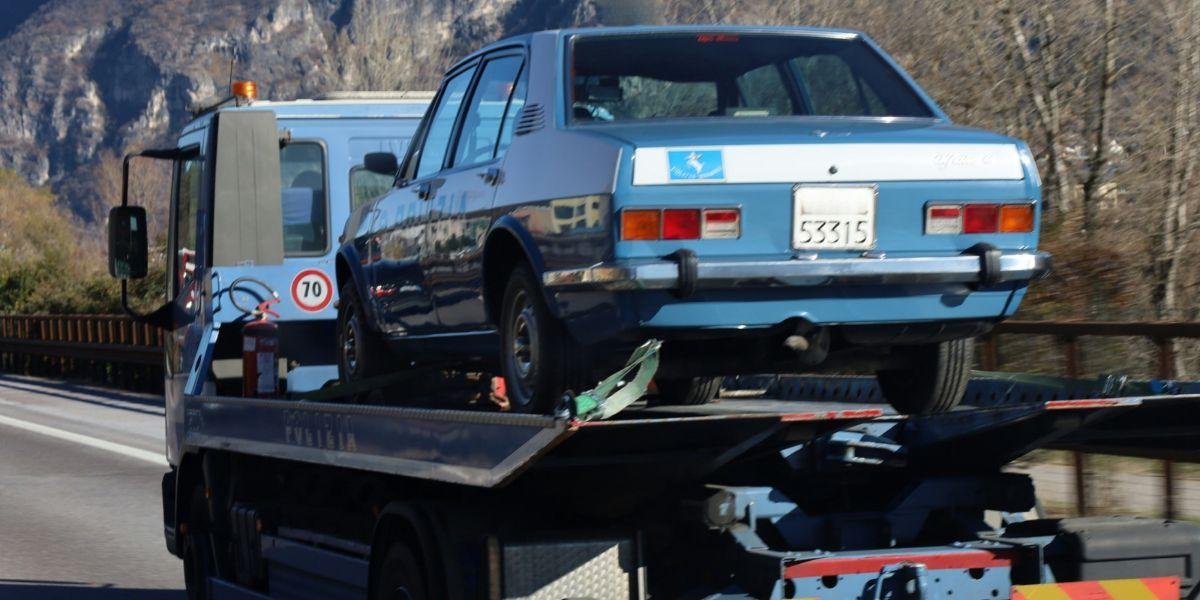
A non-running car sits in a driveway, the transport booking is arranged, and the owner believes everything is ready for pickup. The car does not start, but the shipping company already knows that. Then the carrier arrives and finds something the booking description never mentioned. Two of the wheels will not turn.
That one detail can change the entire loading plan. A car with a dead engine may be easy to pull onto a trailer if it rolls freely, steers normally, and can be controlled while moving. Locked wheels, damaged steering, or a collapsed suspension create a different physical problem.
The scenario is illustrative, not a reported incident involving a particular customer or carrier. It points to a distinction that is easy to miss when booking transport for a broken-down, auction-purchased, or accident-damaged automobile. In the vehicle shipping industry, “non-operable” covers a wide range of conditions, and knowing a car cannot be driven does not tell a dispatcher which truck, trailer, or loading method to choose.
What Is the Difference Between a Non-Running Car and an Immobile One?
A non-running car cannot make its own power, while an immobile car cannot move even when an outside force pulls it. The gap between the two shapes the whole job.
A sedan with a failed engine may still have four inflated tires, working steering and a transmission that shifts into neutral. With a properly equipped winch system, a qualified operator can often load it without trouble.
Now take a similar sedan with a stuck parking mechanism, damaged front wheels or locked steering. Pulling on it may not turn the wheels at all, so the tires drag across the pavement and the car fails to follow the path to the loading deck.
That is why “the car does not run” often falls short as a description. A carrier needs to know which functions work, which are impaired and whether the structure can handle the proposed method. Accurate details matter most when the car sits at an auction yard, repair shop, salvage facility or private property where the owner will not be present during loading.
Why Does Standard Winch Loading Have Limits?
Winching lets a carrier move a vehicle without relying on its engine. Instead of driving up a ramp, the car is pulled by mechanical equipment under the operator’s control. The method still depends on a controllable path, a suitable loading surface and attachment points, and a plan to prevent an uncontrolled roll.
When all four wheels rotate and the steering can be directed, a winch-equipped carrier may handle a non-running car without a separate recovery operation. Locked wheels add friction that can make normal rolling impossible, and damaged steering can pull the car off its intended path. A broken suspension component or missing wheel raises further concerns about clearance, stability and how the weight is supported.
Pulling harder is no substitute for suitable equipment. A qualified operator must choose the approach after assessing the vehicle and the working area.
Some immobilized vehicles can move on specialized dollies or wheel skates that bypass the affected wheels. Others call for a rollback truck or a flatbed arrangement, and a properly equipped facility may use a forklift when the car can be lifted and supported safely. None of these options is interchangeable. Weight, damage, ground clearance, lift points and the condition of the wheels and suspension all matter.
Collision damage can also hide structural weakness that exterior photographs do not show, and unsuitable lifting or attachment points could add damage or create a hazard. The equipment choice therefore starts with an honest description of mobility, then gets confirmed by a qualified carrier or recovery professional instead of being improvised after the wrong truck arrives.
What Should Owners Tell the Carrier Before Pickup?
Four questions matter more than whether the engine starts:
- Can the wheels roll? Identify any seized, damaged or missing wheels and whether the tires are intact.
- Can the vehicle steer? Explain whether the front wheels turn and whether the steering system is damaged or locked.
- Can its movement be controlled? Report known braking problems, parking-brake issues, and any condition that affects how the car can be stopped or restrained.
- Can it be moved into neutral? Say so if the transmission is locked, the electronic system is dead, or the keys are unavailable.
These answers paint a fuller picture than “running” or “non-running.” A car may keep one function and lose another, and the combination sets the practical handling problem. A concise description should also include the correct year, make, and model, any modification that affects size, who can authorize release, and recent photographs. Owners should not attempt mechanical releases or improvised towing without expertise and manufacturer guidance.
Pickup access
A carrier may own the right equipment and still be unable to use it safely at the address. Residential streets bring narrow approaches, low branches, tight turns, and parked cars, and apartment complexes or commercial sites may restrict large vehicles.
With a running car, the customer can drive to a larger meeting point. An immobilized one removes that workaround, so the dispatcher must decide whether the truck can reach the site, whether a smaller recovery vehicle is needed, or whether another pickup location works. Storage lots and body shops add facility hours, gate access, and permission to move the car.
Auction and salvage purchases
Online auctions let buyers purchase cars far from home, but listings rarely give a transporter everything it needs. A listing may say the engine starts, that the car does not move under its own power, or that the seller did no full mechanical evaluation. None of that guarantees the wheels, steering and brakes suit ordinary loading, and visible collision damage may hide trouble with a wheel hub, suspension arm, axle or transmission.
Before arranging collection, the buyer can ask the auction or storage facility about rolling ability, steering, wheel condition, and keys. If the facility cannot confirm them, the buyer should pass that uncertainty to the transporter rather than guess. The carrier can then decide whether the job fits its normal equipment or needs further assessment.
How Does Accurate Condition Information Affect Quotes and Dispatch?
A quote for a running car usually assumes the vehicle can be driven into position and loaded by the carrier’s routine process. Non-operable transport may need extra equipment, handling time, or coordination, and locked wheels, missing tires, or severe damage add complexity. No universal surcharge exists. Cost depends on the route, vehicle size, carrier equipment, loading environment, scheduling, and the services actually required.
A fair comparison starts by confirming that every quotation rests on the same vehicle description. Setting a standard running-car price beside a specialized recovery-and-transport arrangement can make one provider look inexplicably expensive.
Owners researching the topic can consult a non-operable vehicle shipping guide that separates a car able to roll, steer, and brake from one needing a more specialized loading setup. Any final quote should reflect the actual condition and agreed services, and no informational guide replaces a carrier-specific assessment.
Transport planning involves several hands. A customer supplies the details, a dispatcher coordinates the shipment, and a carrier evaluates equipment and access. When information drops out between steps, a driver arrives expecting one load and finds another.
A booking note reading “non-running, winch required” suggests a car that otherwise rolls and steers. If the wheels are actually locked and the steering cannot be released, the assigned equipment may not work. A failed pickup reaches beyond one customer, since the carrier may have other vehicles scheduled, a planned loading sequence and delivery commitments tied to trailer space and route. Customers should tell the provider if the car’s condition changes after booking, because an added inspection or revised plan may be needed.
Why Do Securement, Records and Carrier Checks Matter?
Loading an immobilized car is only the start, because the vehicle must also be secured for travel. The Federal Motor Carrier Safety Administration maintains cargo securement requirements for vehicles on commercial motor vehicles, with specific provisions for automobiles, light trucks and vans and separate rules for heavier equipment. For automobiles, federal requirements address restraints that prevent unwanted movement, including the design and use of securement devices and attachment arrangements.
Those rules do not tell anyone how to recover a particular damaged vehicle. Damage can limit the available attachment options, which makes professional assessment more important.
Photographs help most when they show wheels, tires, body panels and accessible underbody areas as they looked at pickup. They also record pre-existing damage that could otherwise become a dispute after delivery. A general note such as “inoperable” may not capture locked steering, missing wheels or major suspension damage, so the customer or an authorized representative should confirm that the carrier’s record names the key mobility limits. Owners should keep copies of the transport agreement and condition records, and arrange release authorization ahead of time when a facility is handing over the car.
A company that advertises nationwide shipping is not necessarily equipped for the specific load. FMCSA’s SAFER system offers a public Company Snapshot with identifying information and available safety records for motor carriers. That check cannot prove a driver has the tools to load a car with locked wheels, so equipment suitability still needs direct confirmation. Customers can ask how the company decides whether the car can be loaded, whether the proposed equipment is available and what happens if a condition discrepancy turns up before pickup.
A non-running car can still be simple to transport when its wheels, steering and other functions allow controlled movement. One with locked wheels or structural damage may need a fundamentally different plan, which affects equipment, access, scheduling and the quote. The safest starting point is an accurate description rather than an optimistic one. A locked wheel found during planning is a manageable detail, while the same condition found after an unsuitable carrier arrives becomes an avoidable operational problem.