
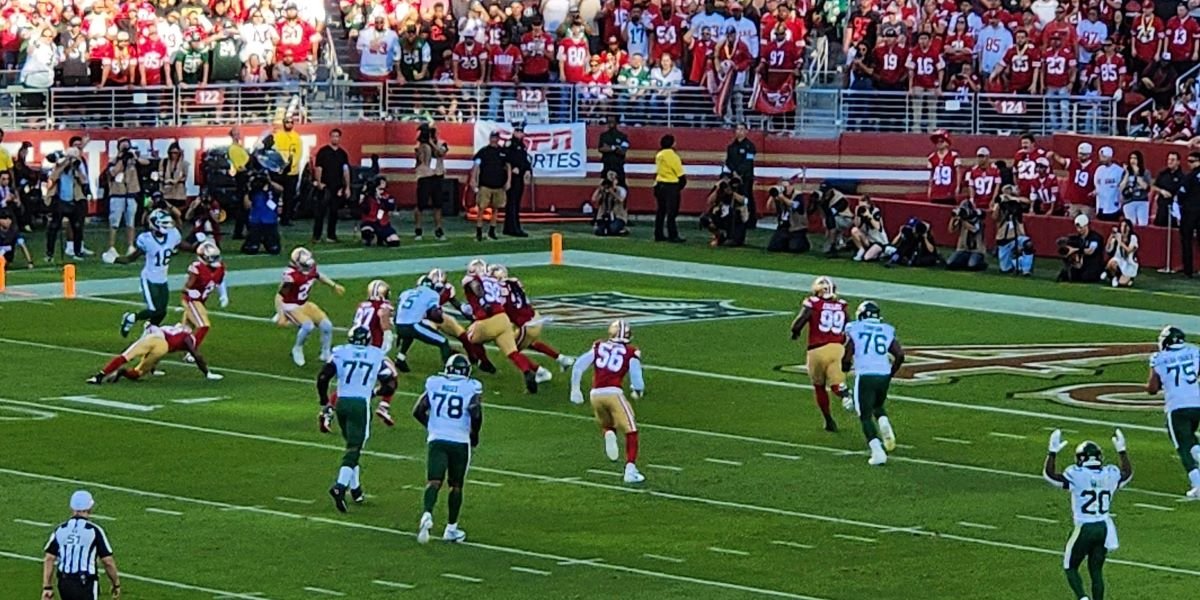
Chicago State University will play its first football game in program history on August 29 when the Cougars face Roosevelt University at SeatGeek Stadium in Bridgeview. The game marks the launch of the only NCAA Division I football program in the city of Chicago and brings Division I football to the South Side for the first time since the University of Chicago departed the Big Ten in 1939.
Key Takeaways
- Chicago State University opens its inaugural Division I football season on August 29 against Roosevelt University at SeatGeek Stadium in Bridgeview, becoming the only NCAA Division I football program in Chicago
- The Chicago State University Board of Trustees unanimously approved the addition of football in December 2025 after more than three years of preparation by an exploratory committee that included NFL veterans Howard Griffith, Tom Thayer, Otis Wilson, and Vaughn Bryant
- Head Coach Bobby Rome II built the inaugural roster through transfers and recruits, with players transferring from programs including Western Michigan and Wagner College to be part of the program’s founding class
- The Cougars will compete as an independent program in the NCAA Division I Football Championship Subdivision in 2026 before joining the Northeast Conference beginning in 2027
- Chicago State, located in the Roseland neighborhood on the Far South Side, is positioning the football program as both an athletic milestone and a community investment in a part of the city that has historically been underserved by Division I athletics
The South Side Has Not Had Division I Football in Nearly Nine Decades
The historical weight of the August 29 kickoff extends well beyond the athletic department. The last time a Division I football team called Chicago home was 1939, when the University of Chicago, under president Robert Maynard Hutchins, famously shut down its powerhouse football program and withdrew from the Big Ten Conference. That decision, rooted in Hutchins’ belief that big-time athletics distracted from academic mission, removed Division I football from the city entirely. The University of Chicago now competes in Division III. For 87 years, the third-largest city in the United States has had no Division I football program of its own.
Chicago State’s entry into the FCS corrects that absence, and it does so from a part of the city that carries its own significance. The university’s campus sits in Roseland on the Far South Side, a predominantly Black neighborhood that has faced decades of disinvestment, population loss, and public safety challenges. The football program does not claim to solve those structural problems, but the players and administrators building it have been explicit about what the program represents in that context.
Players Transferred From Established Programs to Build Something From Nothing
Head Coach Bobby Rome II assembled the inaugural roster without the benefit of existing infrastructure, program history, or the recruiting advantages that come with an established football culture. The Cougars have no game film to show recruits, no win-loss record to reference, and no alumni network built through decades of football Saturdays. What Rome offered instead was the chance to be first.
Senior linebacker Armani Itote transferred from Wagner College on Staten Island, New York, to join the program. At media day on August 5, Itote framed his decision in terms that went beyond football. The South Side of Chicago, he said, has been defined by a particular narrative for too long, and the football program is an opportunity to rewrite part of that story. For Itote, the transfer was about legacy: building something that would exist for players who come after him.
Sophomore running back Tre Hartwell transferred from Western Michigan, where he won a Mid-American Conference championship. Hartwell, who is from Nashville, chose Chicago State over the stability of an established program because the opportunity to shape a program from its founding class was something no existing school could offer. Senior safety Marlon Ayers Jr. described media day itself as a moment that underscored the significance of what the team is building, noting that the attention and the cameras validated something the players had been working toward in relative anonymity through spring practice and summer conditioning.
The Program Was Built Over Three Years With NFL Veterans on the Exploratory Committee
The path to the August 29 opener began in January 2023, when Chicago State formed an exploratory committee to evaluate whether Division I football was feasible for the university. The committee included former NFL players Howard Griffith (a two-time Super Bowl champion running back who played at the University of Illinois), Tom Thayer (a longtime Chicago Bears offensive lineman), Otis Wilson (a member of the 1985 Bears Super Bowl championship team), and Vaughn Bryant. The group also included Chicago high school football coaches, community leaders, and school officials.
The committee spent more than two years evaluating infrastructure requirements, budget projections, recruiting pipelines, scheduling logistics, and conference affiliation options before presenting its findings to the Board of Trustees. In December 2025, the Board voted unanimously to approve the program. Spring practice followed in early 2026, and the Cougars have spent the summer preparing for the opener at a pace that compressed what most programs build over multiple years into a single calendar year.
The university selected SeatGeek Stadium in Bridgeview as its home venue. The 20,000-seat facility, which previously served as the home ground for the Chicago Fire soccer club, gives the Cougars a stadium that exceeds the capacity of many FCS programs’ home venues. The choice signals that Chicago State is building the program with scale in mind, even as the team competes as an independent in its first season before joining the Northeast Conference in 2027.
University Leadership Has Made the Program a Visible Institutional Priority
University President Zaldwaynaka “Z” Scott has been a consistent public presence throughout the program’s development, attending practices and engaging with players as the team prepares for its opener. Scott’s involvement reflects a broader institutional strategy that positions football not only as an athletic addition but as a tool for raising the university’s national profile, increasing enrollment, and strengthening community engagement on the South Side.
Athletic Director Monique Carroll has overseen the program’s operational buildout, coordinating facility planning, staffing, and the logistical infrastructure required to field a Division I team on an accelerated timeline. State Representative Marcus Evans, a Chicago State alumnus, publicly endorsed the program when it was announced, connecting the football team to a broader vision for the university’s role as an anchor institution in its community.
The program’s community resonance is already visible in how it has been received on the South Side. Chicago State’s identity as a predominantly Black public university on the Far South Side gives the football program a cultural dimension that extends beyond competition. For a neighborhood where institutional investment has been inconsistent and where young people’s athletic pathways often lead away from the community rather than into it, a Division I program rooted in Roseland offers something that did not previously exist: a reason to stay, or to come.
The Cougars Open Against Roosevelt on August 29 With a Schedule Built for an Independent First Season
Chicago State’s 2026 schedule reflects the realities of an independent program in its inaugural year. The Cougars open against Roosevelt University on August 29 and will face a mix of opponents across the season, with a schedule update in May moving the Virginia University of Lynchburg game from November 21 to November 14. The independent status gives the program flexibility to build relationships with potential future conference opponents and regional programs while establishing a competitive baseline.
Beginning in 2027, the Cougars will join the Northeast Conference, giving them a conference home, an automatic qualifier pathway, and the scheduling stability that comes with league membership. The NEC’s geographic footprint, concentrated in the northeastern United States, will require regular travel, but it also positions Chicago State within a conference structure that supports emerging programs.
For now, the focus is August 29. The Cougars will take the field at SeatGeek Stadium against Roosevelt with no program history behind them and no precedent to follow. What they carry instead is a founding class of players who chose to build something from nothing, a coaching staff assembling a program in real time, and a university community on the South Side that has waited 87 years for Division I football to return to Chicago.
FAQs
When is Chicago State University’s first football game?
The Cougars play their first-ever game on August 29, 2026, against Roosevelt University at SeatGeek Stadium in Bridgeview, Illinois.
What division does Chicago State football compete in?
Chicago State competes in the NCAA Division I Football Championship Subdivision (FCS), formerly known as Division I-AA. The program will play as an independent in 2026 and join the Northeast Conference beginning in 2027.
Is Chicago State University an HBCU?
Chicago State University is not formally classified as a Historically Black College or University (HBCU), but it is a predominantly Black public university located in the Roseland neighborhood on Chicago’s Far South Side, serving a student population that is majority Black and rooted in the surrounding community.