

By: Lennard James
Attorney Henry E. Reaves III, Esq. has released his powerful and thought-provoking new book, They’re Trying to Make Us Slaves Again… And This Is How We Stop Them, a work designed not only to examine the economic and social challenges confronting communities today, but also to offer solutions for becoming economically stronger, more informed, and increasingly self-sufficient.
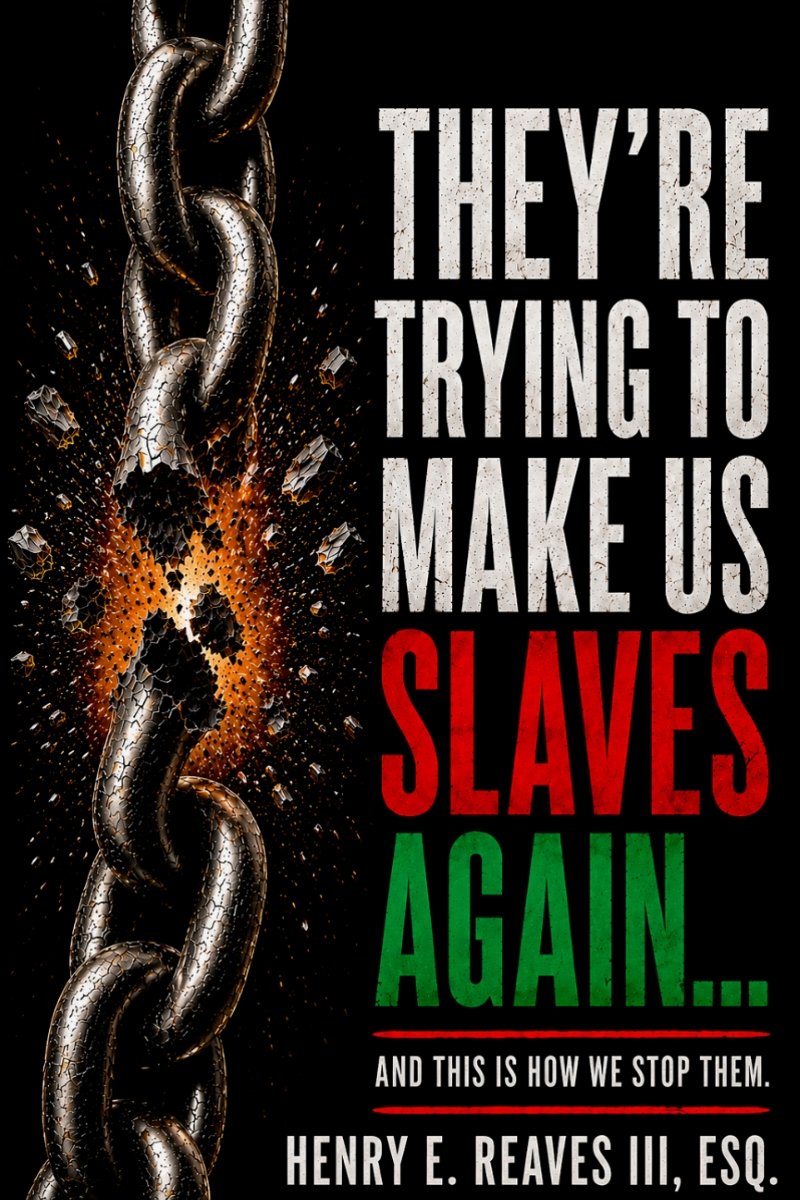
The book’s striking cover immediately communicates its message. A massive metal chain is shown breaking apart, symbolizing the ability of individuals and communities to break cycles that have restricted economic progress and opportunity for generations. The title is intentionally provocative, but the heart of the book is centered on something constructive: solutions, empowerment, education, ownership, and economic independence.
Through They’re Trying to Make Us Slaves Again… And This Is How We Stop Them, Attorney Henry E. Reaves III, Esq. challenges readers to examine what freedom truly means in modern America. He argues that freedom cannot be measured solely by the absence of physical bondage. Economic security, access to opportunity, education, homeownership, entrepreneurship, financial literacy, political participation, and the ability to build generational wealth are also critical components of meaningful independence.
Rather than simply identifying problems, Attorney Henry E. Reaves III, Esq. uses the book to encourage readers to think about practical ways individuals, families, businesses, churches, and community organizations can strengthen their economic positions.
One of the central messages is the importance of understanding how money moves through a community. When residents support local businesses, encourage entrepreneurship, educate young people about finances, pursue ownership, and intentionally create opportunities for one another, communities can begin developing stronger economic foundations.
The book encourages a transition from simply earning money to understanding how to retain, invest, circulate, and grow resources within the community.
For Attorney Henry E. Reaves III, Esq., economic empowerment also requires entrepreneurship and ownership. Building businesses can create employment, generate community investment, and provide families with assets that may be transferred from one generation to the next. The book encourages readers to think beyond short-term income and begin considering long-term wealth creation.
Financial education is another important component of the solutions presented in the book. Understanding credit, banking, investing, homeownership, insurance, business development, and wealth preservation can provide families with tools to make stronger financial decisions.
The message is particularly important for younger generations.
Attorney Henry E. Reaves III, Esq. encourages parents, educators, mentors, business leaders, and community organizations to expose young people to entrepreneurship, financial literacy, professional careers, property ownership, investing, and civic leadership at an early age.
The book also emphasizes collective responsibility. Economic advancement cannot depend exclusively upon government programs, corporations, or outside institutions. Strong communities are also created when residents intentionally support one another, share knowledge, mentor young people, patronize community businesses, and develop institutions capable of creating sustainable opportunities.
That philosophy transforms the book from a commentary about existing conditions into a blueprint for action.
The broken chain displayed prominently on the cover represents this central idea. While the chain symbolizes systems and circumstances that may restrict progress, the exploding link represents the ability to break cycles through knowledge, preparation, cooperation, economic participation, and determination.
Attorney Henry E. Reaves III, Esq. also challenges readers to become more knowledgeable about their legal and civic rights. Economic strength and civic participation often intersect. Understanding government, voting, public policy, education, business regulations, and the legal system can help citizens become more effective advocates for themselves and their communities.
The release of They’re Trying to Make Us Slaves Again… And This Is How We Stop Them creates an opportunity for a broader conversation involving business owners, clergy, educators, parents, elected officials, civic organizations, entrepreneurs, and young adults.
At its core, the book asks communities to move beyond identifying inequality and begin developing strategies capable of producing measurable economic progress.
The message from Attorney Henry E. Reaves III, Esq. is ultimately one of action and empowerment: communities can become stronger when people understand the power of ownership, education, entrepreneurship, financial literacy, civic engagement, and collective economic participation.
They’re Trying to Make Us Slaves Again… And This Is How We Stop Them is more than a provocative title. It is a call for readers to examine where their communities stand economically, determine where they want to go, and begin building the financial infrastructure necessary to create lasting independence and generational prosperity.
For Attorney Henry E. Reaves III, Esq., breaking the chain begins with knowledge, but lasting freedom is achieved by turning that knowledge into economic action.
Disclaimer: This article is for informational and editorial purposes only. References to financial literacy, investing, banking, credit, insurance, homeownership, entrepreneurship, or wealth-building concepts are not intended as financial, legal, tax, or investment advice. Readers should consult qualified professionals regarding their individual circumstances.