

By: Julian Walker
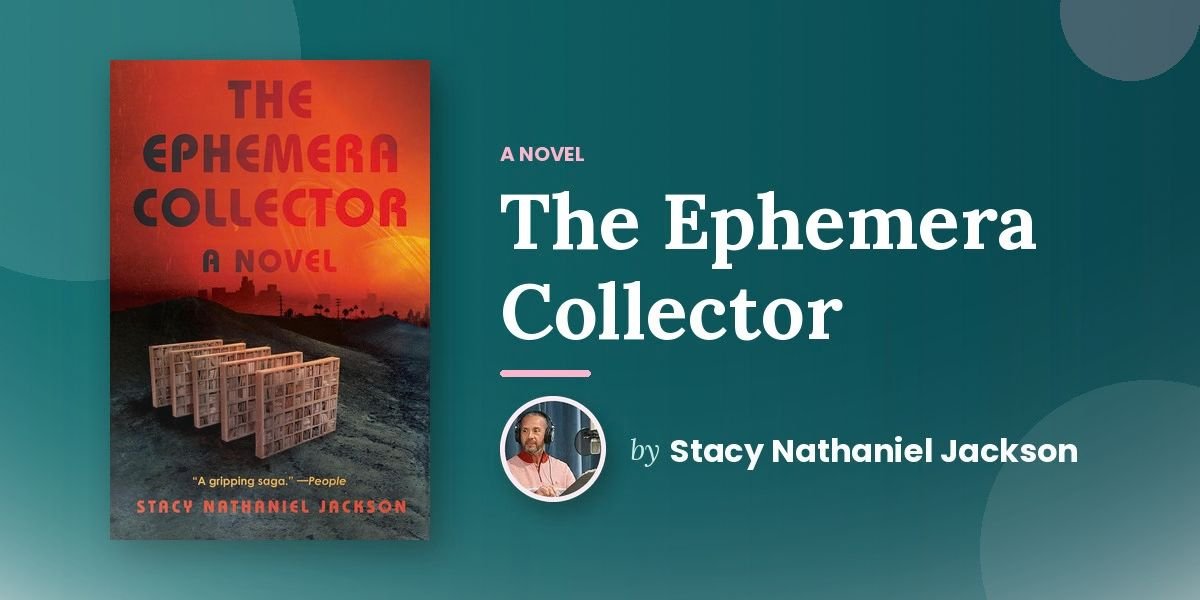
The most formally ambitious novels are the ones that understand their structure as an argument rather than a container, that have built the shape of the book to mean something rather than simply to hold the content. Stacy Nathaniel Jackson’s The Ephemera Collector is that kind of novel, and the argument its structure makes is the same argument its protagonist Xandria Brown makes in her work as curator of African American Ephemera at the Huntington Library: that preservation matters, that what we choose to collect and how we arrange what we have collected determines what the future is able to understand about the present, and that this work of preservation is not incidental to human survival but central to it. Jackson has built a novel that is itself an archive, assembled from prose and poetry and memos and advertisements and dream journal doodles and images and documents and date-stamped photographs, and the experience of reading it is the experience of moving through the kind of fragmentary, multimedial collection that a real archivist might spend a career organizing into legibility.
The novel unfolds in 2035 Los Angeles, a near-future California shaped by climate disaster and social fragmentation, where Xandria is doing the work of preservation in conditions that make the work both more urgent and more difficult than it has ever been. Her passion project, collecting the ephemera of Diwata, a separatist underwater nation whose existence is inspired by Octavia E. Butler’s legacy and imagination, pulls her into the political and existential stakes of a world in which the question of which cultures survive and which are forgotten is being actively contested. When she becomes the target of a violent plot and must rely on her AI assistive technologies for protection, the novel begins expanding outward through time in ways that are genuinely audacious, moving from the immediate crisis of near-future Los Angeles through ocean civilizations, the cosmos, a far-future symposium attended by an immortal Xandria, and even the inner lives of the bots who are simultaneously protecting and monitoring her.
The bots are one of the novel’s most unsettling and most thoughtful elements. Their competing attempts to preserve Xandria’s quality of life involve the same cataloguing impulse that animates her own archival work, but the data they are collecting is her, her physical symptoms and emotional reactions and biomedical markers, and the parallel between human archivism and AI surveillance is rendered with enough complexity to resist easy resolution in either direction. Jackson posits a future in which AI can bridge the gaps created by human limitation while honestly acknowledging the violations of privacy and autonomy that such bridging requires.
The shortlisting for the 2026 William Saroyan International Prize for Writing and the starred Library Journal review confirm what the reading experience makes immediately apparent: this is a debut of genuine importance from a writer who is, as one reviewer put it, an author to watch.
If you love Afrofuturist fiction that takes the formal possibilities of the novel seriously as well as its political and human possibilities, and you want to read the debut that critics have been calling both an ambitious homage to Octavia Butler and something entirely its own, The Ephemera Collector by Stacy Nathaniel Jackson is the book that will stay with you. Pick up your copy on Amazon today and let Xandria Brown show you what preservation is actually for.