

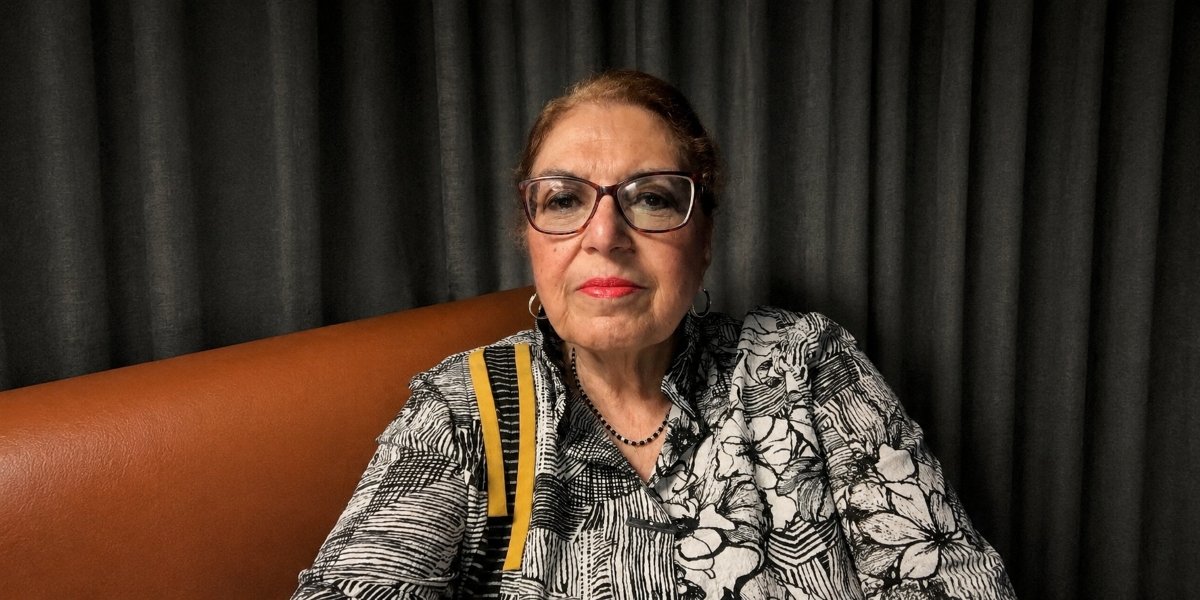
Deck: Nobody called it discrimination when four school districts turned her down. Nobody called it exclusion when a counselor told her deafness ruled out nursing. But that is exactly what it was.
When Irene Tunanidas was rejected by four Ohio school districts after earning her Master’s in Deaf Education from Kent State University in 1972, the rejections did not come with that word attached. There was no formal complaint filed. No civil rights language was invoked. The school administrators who turned her down were opposed to the use of ASL in their programs, and a deaf teacher who believed in sign language was simply not the hire they wanted to make. It was presented as a professional preference. It was, in practice, a structural exclusion.
That distinction matters. The gap between what discrimination looks like in policy language and what it looks like in the daily experience of people navigating institutions not designed for them is one of the central tensions in disability justice work. Irene Tunanidas has been living inside that gap for more than fifty years. Her story is not just a personal one. It is a record of how systems behave when they are not held accountable.
The Civil Rights Work That Never Got Called That
Deaf advocacy in the United States has a long history that does not always get named alongside the broader disability rights movement, even though it shares many of the same battles and much of the same logic.
Deaf people have fought for the right to use their own language in educational settings, for access to institutions that were built without them in mind, for representation in professions that assumed they could not perform, and for the basic recognition that being deaf is not a deficit to be corrected but a difference to be accommodated. Those are civil rights arguments. They have been made by deaf advocates for generations. They have not always been received as such.
Irene’s career sits inside that history whether or not it was ever labeled that way. When she fought school districts to use ASL in her classroom, she was pushing against an institutional bias with roots going back over a century. When she was hired by the Youngstown City Schools after four rejections, she walked into a profession that had just told her four times it did not want her there. She did the work anyway. And she kept doing it for forty years.
Alexander Graham Bell and the Damage That Outlasted Him
The institutional resistance to sign language in deaf education did not appear from nowhere. A significant part of it traces directly to Alexander Graham Bell and the oralism movement he championed in the late nineteenth and early twentieth centuries. Bell had a deaf mother and married a deaf woman who identified entirely with the hearing world and rejected sign language. His views on deafness were explicit. He believed that deaf people should be integrated into hearing society through spoken language and lip-reading, and he was a vocal opponent of ASL and of deaf people forming their own communities and institutions. He used his considerable influence to push those views into educational policy, and the effects lasted well beyond his lifetime.
The preference for oral methods over sign language in deaf education, the suspicion of ASL as a legitimate language, the resistance to deaf teachers in deaf classrooms, all of it has roots in the oralist tradition that Bell helped institutionalize. The school districts that rejected Irene in 1972 were operating inside a framework he helped build. That is not ancient history. It is the context in which her career happened.
What Visibility Does and Does Not Fix
The past several decades have brought genuine progress in the public visibility of deaf people in American culture. Marlee Matlin won an Academy Award in 1987. Troy Kotsur won one in 2022. Both are profoundly deaf actors who have worked in demanding, communication-intensive environments and performed at the highest level. Their visibility matters. It challenges the assumption that deaf people cannot fully participate in hearing professional spaces.
But visibility is not the same as structural change. Matlin and Kotsur’s achievements do not alter the day-to-day reality of most deaf people navigating most institutions. They do not change the fact that deaf applicants are still passed over in hiring. They do not change the fact that schools still underserve deaf students. They do not change the fact that the barriers Irene encountered in 1972 are recognizable to deaf professionals today.
Representation in high-profile spaces is meaningful and worth celebrating. It is also not a substitute for the harder, less visible work of changing how institutions operate at the ground level. Irene spent forty years doing that harder work, in classrooms and school board meetings and community organizations, without the platform or the visibility. That work is the actual substance of what advocacy looks like most of the time.
The School Districts That Still Have Not Answered For It
When Irene was rejected by four Ohio school districts in 1972, nobody framed it as a civil rights violation. The Americans with Disabilities Act did not yet exist. The language and legal infrastructure for challenging that kind of exclusion was not in place the way it is now.
But the ADA was passed in 1990. The legal framework has existed for over three decades. And the pattern of deaf and disabled educators being passed over, managed out, or hired into limited roles rather than full professional positions has continued in ways that rarely result in formal accountability.
The Special Program Supervisor at Poland Local Schools who insisted Irene be hired part-time in 2003, against the preference of the Board of Education, did something that should not have required one person’s individual advocacy to accomplish. The hiring of a qualified educator with forty years of experience should not have come down to whether one supervisor was willing to push for it. That it did is not a reflection of Irene’s qualifications. It is a reflection of how institutions behave when systemic accountability is absent.
What Her Legacy Actually Argues For
Irene Tunanidas spent more than fifty years inside the deaf education and advocacy space. She taught hundreds of deaf children. She led the Ohio Association of the Deaf. She fought, consistently and without much public recognition, for a community that the broader systems of education, employment, and healthcare have historically underserved.
Her story is not an argument for individual resilience as a substitute for systemic change. It is an argument for systemic change, made visible through one person’s experience of what the absence of it costs. The fact that she succeeded despite four rejections and colleagues who expected her to fail is not evidence that the system works. It is evidence that she was exceptional enough to overcome a system that should not have required overcoming.
The disability rights movement has spent decades making exactly that argument in the context of physical disability, race, gender, and other intersecting identities. Deaf advocacy belongs in that conversation, with the same analytical seriousness, the same willingness to name what exclusion looks like even when it is not labeled as such, and the same commitment to structural accountability rather than individual inspiration.
Irene’s career makes that case whether she frames it that way or not. The life is the argument.
A Platform She Earned, Finally Made Visible
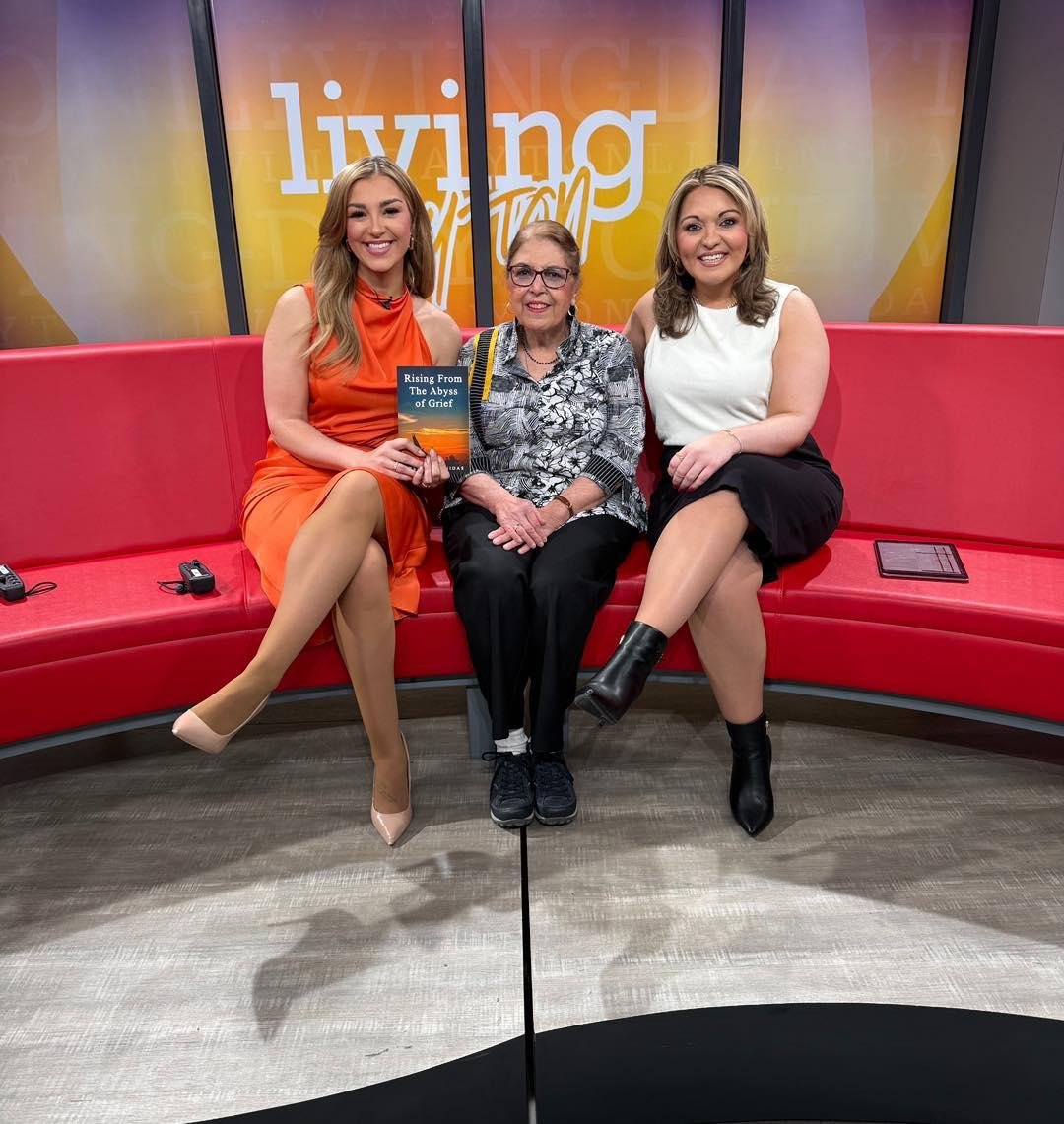
This year, Irene Tunanidas appeared on WDTN-TV’s Living Dayton segment, sharing her story through a sign language interpreter with a regional television audience. She spoke about her career, her advocacy, and the book that came out of the most personal chapter of her life.
For a woman whose work has been grounded in community and largely invisible to mainstream audiences, the appearance represented something worth naming. The contributions she made across fifty years of teaching, organizing, and advocating were always significant. The platform is new. The work behind it is not.
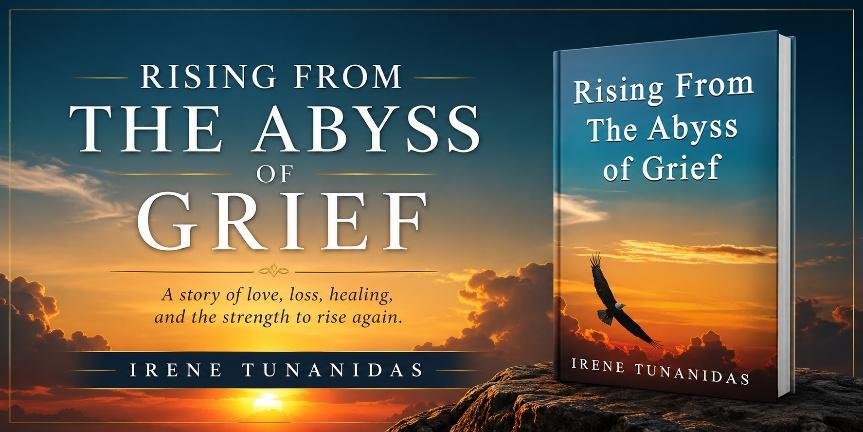
Her book, Rising From the Abyss of Grief, is a footnote to a life that is the real argument. But it is worth reading, because it was written by someone who understands, from the inside, what it costs to do the work that most institutions do not value until it is finally brought into view.
Irene Tunanidas has been doing the work for fifty years. The conversation about what that work represents is overdue.
To learn more about Irene Tunanidas and her work, visit the official website or follow her on Facebook and Instagram.