

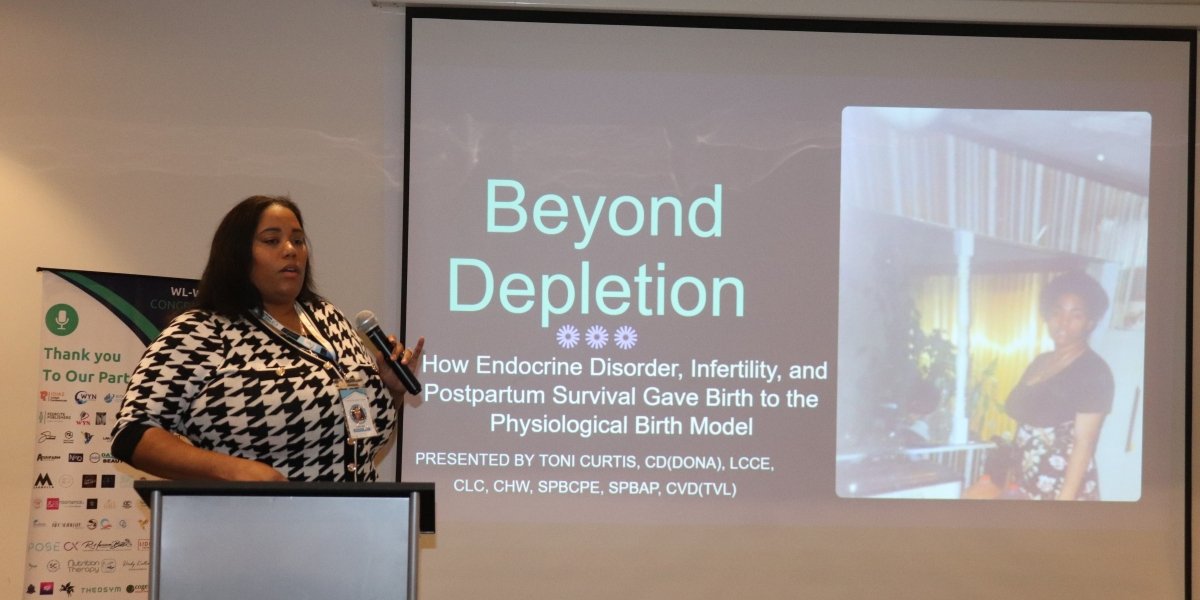
By: Toni Curtis
Key Takeaways
- September is National Infant Mortality Awareness Month, observed alongside NICU Awareness Month.
- The US infant mortality rate was 5.52 deaths per 1,000 live births in 2024. For infants of Black non-Hispanic mothers, it was 10.98, compared with 4.41 for infants of White non-Hispanic mothers, according to the Centers for Disease Control and Prevention.
- In Mecklenburg County, North Carolina, roughly 70 infants die before their first birthday each year, and Black infants are more than three and a half times as likely to die before age one as white infants.
- The CDC has reported that more than 80 percent of pregnancy-related deaths are preventable.
- A two-year doula partnership between BirthWise Doula Services and AmeriHealth Caritas North Carolina served roughly 200 families across four counties and is now expanding statewide.
- Twenty-six states and Washington DC now reimburse doula services through Medicaid, a figure that has grown steadily since 2022.
Awareness months have a structural weakness. They arrive, they produce statements, and they leave the underlying arithmetic exactly where they found it. National Infant Mortality Awareness Month, observed every September alongside NICU Awareness Month, has run for years against numbers that move slowly and unevenly.
The numbers are not ambiguous. The Centers for Disease Control and Prevention recorded a US infant mortality rate of 5.52 deaths per 1,000 live births in 2024. For infants of Black non-Hispanic mothers, the rate was 10.98. For infants of White non-Hispanic mothers, it was 4.41. On the maternal side, the 2024 rate was 17.9 deaths per 100,000 live births overall and 44.8 for Black non-Hispanic women, against 14.2 for White non-Hispanic women. The CDC’s review of maternal mortality review committee findings, published in 2022, concluded that more than 80 percent of pregnancy-related deaths are preventable.
That last figure is the one that changes the conversation. A gap this size, with that preventability rate behind it, is not a story about biology. It is a story about what care people actually receive.
The Gap Has A Local Address
Charlotte is a useful place to look at it, because Mecklenburg County publishes its own numbers.
The county’s most recent infant mortality report, covering 2014 through 2023, found that roughly 70 babies die before their first birthday in Mecklenburg each year, against a county rate of about 5 deaths per 1,000 births. Within that, Black infants are more than three and a half times as likely to die before age one as non-Hispanic white infants.
It is also where Toni Curtis has spent the last six years building an answer that a health plan agreed to fund.
How A Payer Partnership Tested The Doula Model
Curtis founded BirthWise Doula Services in 2020, after nearly thirty years in birth work that began in 1996 when she was a high school peer educator supporting teen mothers through pregnancy and postpartum. Her practice is built on The Lifespan Birth Method, a framework organized around four arms: clinical care coordination, body and breath work, nutrition and fertility, and policy and advocacy.
Its central claim is that birth is a physiological process with requirements that do not disappear when a case becomes complicated. Movement, rest, nourishment, privacy and time are needs, not preferences, and they apply during an induction and during a surgical birth as much as during an uncomplicated labor.
That claim was tested in a way most maternal health arguments never are. AmeriHealth Caritas North Carolina ran a two-year doula partnership built on the methodology, serving roughly 200 families across Mecklenburg, Union, Cabarrus and Gaston counties. The plan is now expanding the program statewide.
“I demanded that I deliver full childbirth education with the clients,” Curtis has said of the partnership. “This was not modified, because they wanted me to modify it and I refused.”
Why The Economic Framing Does The Work That Appeals Do Not
Maternal health advocacy has never suffered from a shortage of moral argument. What it has often lacked is a case a health plan will act on.
Curtis works the second lane deliberately. Her public case is that a methodology a payer will fund is the one that survives a budget cut, and that access follows funding rather than sentiment. It is a less comfortable argument than the one usually made in September, and it has the advantage of having moved an actual insurer.
“Everybody loses in the maternal health crisis. Your hospital is losing, women are dying, babies are injured. It’s not always loss of life. Quality is lost.”
The national picture is the baseline any maternal health program works against. The cesarean delivery rate was 32.4 percent in 2024, and 86.1 percent of infants born in 2023 were ever breastfed, per CDC figures.
The research base points in the same direction. A study of Medicaid beneficiaries published in the American Journal of Public Health in 2013 found a 22.3 percent cesarean rate among doula-supported births, against 31.5 percent in the comparison group.
“The evidence is built. The work now is to make it accessible,” Curtis has said. “We stand to fight against disparities, but my expertise is for everyone.”
What Scale Actually Tests
A four-county pilot and a statewide program are different animals, and the difference is where most promising maternal health models fail.
Statewide means recruiting and training doulas in counties where few practice, including maternity care deserts where the nearest hospital with obstetric services can be an hour away. It means a reimbursement pathway that works consistently rather than in a demonstration. It means holding quality steady across a workforce far larger than one founder can supervise directly, which is an operational problem rather than a clinical one.
The policy backdrop is moving in the same direction. As of March 2026, twenty-six states and Washington DC reimburse doula services through Medicaid, according to the National Academy for State Health Policy. The AmeriHealth Caritas route is different in kind, a benefit offered through a managed care plan rather than a state program, which is part of what makes it worth watching.
Curtis has been building toward that scale. She has mentored doulas nationally for years, serves in an advocacy role at DONA International, and represents the Africana Women Working Group, a consultative body to the United Nations Economic and Social Council. Her work runs from practice to policy, which is the range the next phase requires.
The Part Of The Problem That Is Not Medical
Curtis is consistent that her model is not an argument against medicine. Her published position is that birth is “a natural process that is medically observed.” The failure she names is care that proceeds while the body’s needs are ignored, and her strongest line on it comes from her stage material: “Sitting a labouring woman still on a drip and waiting is not patience; it is neglect of the body’s needs, and it does not produce a safer birth. It produces the opposite.”
There is also the question of who is heard. Her own first birth ended with her asking for help she did not receive, and she has built a practice around making sure the women who come to her can ask better questions than she was able to ask.
“A good doula knows how to help you ask the questions you didn’t even know to ask,” she says.
Beyond The Birth
Curtis’s most recent work moves past delivery into the months that follow. Her book, Beyond Depletion: A Nutritional Therapist’s Guide to Postpartum Healing, published in July, addresses nutrient depletion and structured postpartum recovery for both practitioners and mothers.
The postpartum window matters to the infant mortality conversation as well. Most standard care ends at a single visit around six weeks, while the risks it is meant to catch extend well past it.
What September Could Be For
Awareness months work when they attach to something specific. This one has a candidate. A payer-funded model is currently scaling across one state, in a county where roughly seventy families a year bury an infant and the burden falls unevenly.
The evidence, as Curtis puts it, is built. The question is who funds it next.
Frequently Asked Questions
What Is The Current Us Infant Mortality Rate?
5.52 deaths per 1,000 live births in 2024, per the CDC’s National Center for Health Statistics. The rate for infants of Black non-Hispanic mothers was 10.98, against 4.41 for infants of White non-Hispanic mothers.
What Do The Local Numbers Look Like In Charlotte?
Mecklenburg County’s most recent infant mortality report, covering 2014 through 2023, found roughly 70 infant deaths a year and a county rate of about 5 per 1,000 births, with Black infants more than three and a half times as likely to die before age one as white infants.
Why Is The Maternal Mortality Disparity Discussed Alongside Infant Outcomes?
The two track together. The 2024 US maternal mortality rate was 17.9 deaths per 100,000 live births, and 44.8 for Black non-Hispanic women, more than three times the rate for White non-Hispanic women.
What Does A Doula Do?
A doula provides non-clinical support: education, preparation, physical and emotional support during labor, and help weighing decisions. Doula care works alongside obstetric and midwifery care and does not replace it.
Are Payers Covering Doula Care?
Some have begun to. The AmeriHealth Caritas North Carolina partnership described here ran across roughly 200 families in four counties and is now expanding statewide. Program design and findings vary by population.
Where Can Readers Learn More About BirthWise?
At the BirthWise Doula Services website.
Toni Curtis, CD(DONA), LCCE, CLC, CVD(TVL), CHW, SpBCPE, SpBAP, is the founder of BirthWise Doula Services in Charlotte, North Carolina, and the developer of The Lifespan Birth Method™, which treats birth as a physiological process across a woman’s lifespan rather than an isolated medical event. She has worked in maternal health since 1996 and serves as Director of Advocacy at DONA International and as a UN Representative through the Africana Women Working Group, a consultative body to the UN Economic and Social Council. Her methodology underpinned a two-year AmeriHealth Caritas North Carolina doula partnership across four counties, now expanding statewide. Known for her comprehensive work on The Social Determinates of Health, learn more at birthwisedoulas.com
Disclaimer: This article is for general informational purposes only and does not constitute medical advice. Services provide non-clinical support and are not a substitute for care from a licensed healthcare professional. Readers should consult a qualified medical provider regarding pregnancy, childbirth, postpartum recovery, or other health concerns. Individual experiences and outcomes may vary.