
Kwanzaa marks its 60th anniversary in 2026, running from Saturday, December 26, to Friday, January 1, 2027. Each of the seven days honors one of the Nguzo Saba, the seven principles, starting with Umoja on Saturday and closing with Imani on New Year’s Day. The Karamu feast falls on Thursday, December 31.
Key Takeaways
- Kwanzaa 2026 begins Saturday, December 26, and ends Friday, January 1, 2027, with one principle observed each day.
- The first Kwanzaa was celebrated on December 26, 1966, making 2026 the holiday’s 60th anniversary.
- The Karamu feast takes place on December 31, which falls on a Thursday this year.
- The black Umoja candle sits at the center of the kinara and is lit first, followed by the remaining candles from left to right.
- The Saint Louis Art Museum hosts a free Kwanzaa Celebration on Sunday, December 27, from 10 a.m. to 3 p.m. under the theme Ukwakhelana: Rooted in what we share.
- The traditional greeting is “Habari Gani,” meaning “What’s the news?”, answered with the principle of the day.
Kwanzaa at 60 Opens on a Weekend
Kwanzaa was first celebrated on December 26, 1966. The holiday was created that year by Maulana Karenga as a non-religious, non-commercial celebration. Its name comes from the Swahili phrase “matunda ya kwanza,” meaning “first fruits.” The 50th anniversary was marked in 2016, and the 2026 observance reaches 60 years.
The 2026 calendar works in families’ favor. Kwanzaa opens on a Saturday, so the first two principles, Umoja and Kujichagulia, land on a weekend when community gatherings are easier to attend. The week then closes on two days many people already have free: the Karamu falls on December 31, New Year’s Eve, and Imani on January 1, New Year’s Day.
The Kinara Sets the Order of the Week
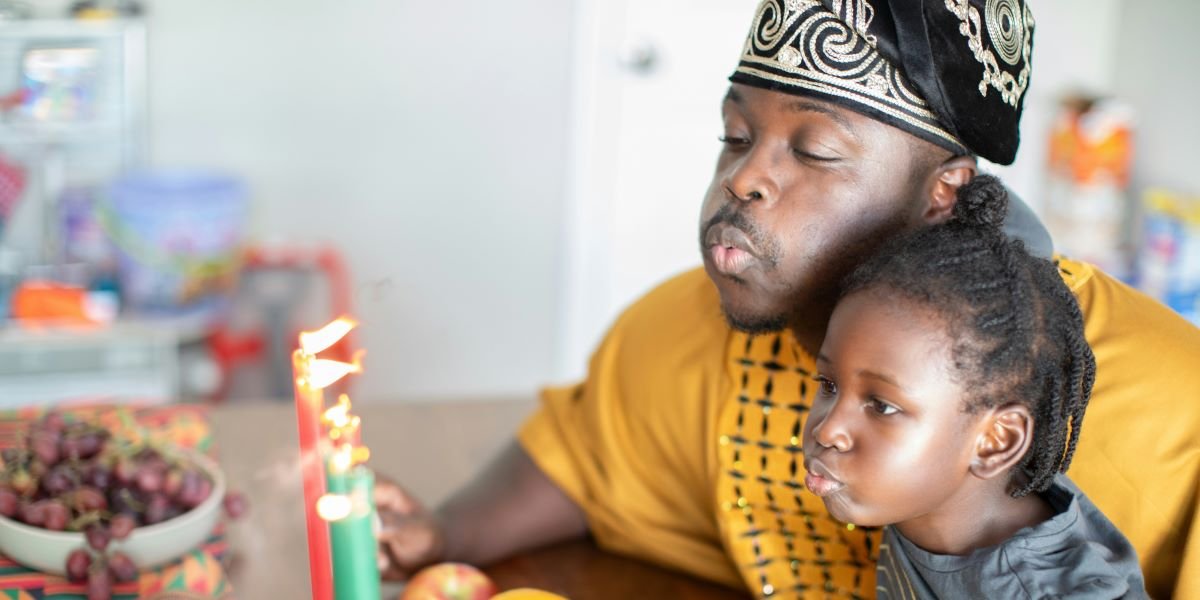
Kwanzaa’s colors carry specific meanings, according to the Official Kwanzaa Website: black for the people, red for their struggle, and green for the future and hope that comes from that struggle. Those colors appear in the mishumaa saba, the seven candles placed in the kinara, or candleholder.
The black candle represents Umoja and sits in the center:
- The three red candles, for Kujichagulia, Ujamaa and Kuumba, are placed to its left.
- The three green candles, for Ujima, Nia and Imani, are placed to its right.
The black candle is lit first. The remaining candles are lit from left to right on the days that follow, which the Official Kwanzaa Website says reflects the people first, then the struggle, then the hope that comes from it.
Each day also has a greeting. Observers ask “Habari Gani,” Swahili for “What’s the news?”, and the reply is the name of that day’s principle.
A Day-by-Day Guide to the Seven Principles in 2026
Saturday, December 26: Umoja (Unity)
The week opens with Umoja, the principle of unity in family, community, nation and race. The black center candle is lit on this first night, and the weekend timing gives households a natural opening for a shared gathering.
Sunday, December 27: Kujichagulia (Self-Determination)
Kujichagulia centers on defining, naming and speaking for one’s own community. That idea runs through current efforts such as Morehouse College’s new multimedia center training Black journalists and storytellers. The Saint Louis Art Museum’s annual Kwanzaa Celebration falls on this day.
Monday, December 28: Ujima (Collective Work and Responsibility)
Ujima asks communities to build together and to treat neighbors’ problems as shared ones. It is the first weekday of the observance, and it often anchors service projects and volunteer efforts.
Tuesday, December 29: Ujamaa (Cooperative Economics)
Ujamaa focuses on building and supporting community-owned businesses. The principle has a timely backdrop this year, as Black-owned employer businesses topped 200,000 for the first time, according to Census Bureau data.
Wednesday, December 30: Nia (Purpose)
Nia calls for making the building and development of the community a collective purpose. Many families use this day to set goals for the coming year.
Thursday, December 31: Kuumba (Creativity) and the Karamu
Kuumba asks people to leave their community more beautiful and beneficial than they found it. It shares the day with the Karamu, the feast at the center of the week’s celebrations. Creative work rooted in that principle is on view this season, including Dorothy I. Burge’s quilt series honoring Black veteran freedom fighters at the Chicago Cultural Center.
Friday, January 1: Imani (Faith)
The week closes with Imani, belief in one’s people, parents, teachers and leaders. Its place on New Year’s Day ties the end of Kwanzaa to the start of the year ahead. Gifts known as zawadi, often handmade, are commonly exchanged near the close of the week.
Where Kwanzaa’s 60th Will Be Celebrated
The Saint Louis Art Museum has confirmed its 2026 program. The free Kwanzaa Celebration runs Sunday, December 27, from 10 a.m. to 3 p.m. CST. It has been held at the museum for more than 25 years and is presented with the Saint Louis Metropolitan Alumnae Chapter of Delta Sigma Theta Sorority, Inc. The day includes live performances, workshops, art making, lounge spaces, take-home materials and a scavenger hunt through the galleries, with a full schedule still to be posted.
The museum’s 2026 theme, Ukwakhelana: Rooted in what we share, uses a Nguni word found in isiZulu and isiXhosa. It translates to “being neighborly” or “building together” and is rooted in the philosophy of Ubuntu.
Other cities have long-running Kwanzaa traditions whose 2026 dates have not yet been announced. Malcolm X College in Chicago has hosted a weeklong celebration and marketplace for more than two decades. Leimert Park in Los Angeles holds an annual Kwanzaa festival and parade during the holiday week.
FAQs
When is Kwanzaa in 2026?
Kwanzaa 2026 runs from Saturday, December 26, 2026, through Friday, January 1, 2027. Each of the seven days is dedicated to one principle of the Nguzo Saba.
What day is the Kwanzaa Karamu in 2026?
The Karamu feast is held on December 31, which falls on Thursday this year. It shares the day with Kuumba, the principle of creativity.
Which Kwanzaa candle is lit first?
The black candle in the center of the kinara, representing Umoja, is lit first on December 26. The remaining candles are lit from left to right on the following days.
Is Kwanzaa a religious holiday?
No. Kwanzaa was created in 1966 as a non-religious, non-commercial celebration of family, community and culture, centered on seven principles.
Is there a free Kwanzaa celebration in St. Louis in 2026?
Yes. The Saint Louis Art Museum hosts its free Kwanzaa Celebration on Sunday, December 27, 2026, from 10 a.m. to 3 p.m. CST, with performances, workshops and art making for all ages.