
By: Randy Tether
There are some people whose stories seem inseparable from the place they call home. Their lives become woven into the fabric of a community until it is difficult to imagine one without the other. In Pittsburgh, a city where rivers converge and steel once shaped both skylines and souls, Miss Freddye has become one of those people.
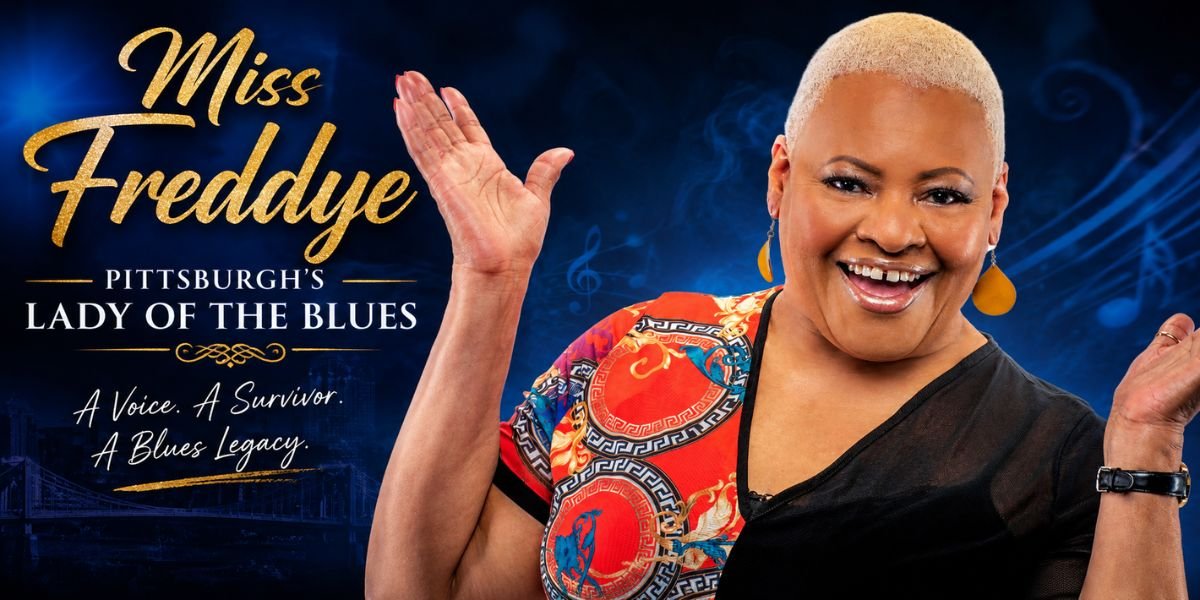
Known to many listeners as “Pittsburgh’s Lady of the Blues,” Miss Freddye has spent decades showing that the blues isn’t simply a style of music. It is a way of understanding life, a language spoken by people who have endured hardship, celebrated small victories, and found hope where others might only see struggle.
That understanding wasn’t learned in a recording studio.
It was earned.
Long before audiences applauded her from concert halls and festival stages, Miss Freddye was serving others as a nurse. For more than thirty years, she devoted her professional life to caring for patients during some of their most difficult days. It is work that demands compassion, patience, and quiet strength. Those same qualities now echo through many of her performances.
Her journey into music began much earlier, inside the walls of the church. Gospel music introduced her to the power of song, not merely as entertainment, but as testimony. There, every lyric carried meaning, every harmony offered comfort, and every performance became an act of faith. Those lessons remained with her.
When she embraced the blues professionally in the late 1990s, she wasn’t changing directions so much as continuing a conversation that had begun years before. The Gospel had taught her about redemption. The blues would teach her how to tell the stories that make redemption necessary.
Listeners noticed.
Her commanding voice, equal parts grit and grace, helped earn respect throughout Pittsburgh’s vibrant blues community. Before long, she was sharing stages with accomplished musicians while building a reputation as one of the region’s notable live performers. Unlike artists who chase trends, Miss Freddye remained rooted in tradition while bringing her own distinct perspective to every song she sang.
Recognition followed.
Her recordings reached audiences beyond western Pennsylvania, earning chart attention that surprised even seasoned observers of the blues genre. She reached the top position on the UK iTunes Blues Chart, suggesting that authentic American blues can still travel across oceans and cultures. Her stirring rendition of “Wade in the Water” climbed to No. 2 on international gospel charts, reminding listeners that the distance between gospel and blues is often measured by little more than circumstance.
Awards accumulated along the way.
Miss Freddye has been honored multiple times by Pittsburgh’s music community, earning Iron City Rocks Awards and recognition as one of the city’s recognized blues artists. Nationally, she received nominations from respected blues organizations, including recognition associated with the widely known Koko Taylor, placing her among artists dedicated to preserving one of America’s enduring musical traditions.
But perhaps the meaningful milestones never appeared on a trophy.
Miss Freddye is a two-time breast cancer survivor.
That fact changes the way one hears her music.
There is a confidence in her performances that cannot be taught. When she sings about perseverance, audiences can understand that she speaks from experience. When she celebrates joy, it is the joy of someone who understands how precious ordinary days truly are. Rather than allowing illness to define her, she turned survival into purpose, becoming an advocate for awareness while continuing to perform with notable energy and optimism.
It is difficult to separate Miss Freddye from Pittsburgh.
The city shaped her, and in return, she has become one of its recognized musical ambassadors. Like Pittsburgh itself, she reflects resilience without sentimentality. She honors the past without living in it. Her performances carry the spirit of a community that has weathered economic hardship, celebrated renewal, and not forgotten the value of honest work.
She continues to perform throughout the region, supporting charitable organizations, mentoring fellow musicians, and strengthening the local arts community. Her success has not distanced her from the neighborhoods and people who first embraced her. If anything, it has deepened that connection.
There is a temptation to measure artists by sales figures, awards, or chart positions. Miss Freddye has earned each of those. Yet those accomplishments only hint at her broader legacy.
One of her notable achievements lies in the trust she has built with audiences.
People believe her.
They believe her when she sings about heartache. They believe her when she sings about faith. They believe her when she smiles between songs and reminds listeners that tomorrow can still hold possibilities, even after yesterday delivered disappointment.
In an era when so much of modern culture values speed over substance and image over character, Miss Freddye stands as a reminder that authenticity can still matter. She has not needed elaborate mythology to explain who she is. Her story has been enough.
A nurse.
A survivor.
A woman of faith.
A champion of the blues.
And above all, a daughter of Pittsburgh whose voice continues to echo beyond the banks of the Allegheny, Monongahela, and Ohio Rivers. Long after the applause fades, that voice remains, a testament to resilience, compassion, and the enduring power of music to tell the truth.