


By: Cal Parish
In the ever-evolving world of medicine, where metrics often take precedence over meaning, Dr. Mauvareen Beverley stands as a fierce and compassionate advocate for change. As President & Founder of Mauvareen Beverley, MD, PLLC, she has created a transformative training roadmap that centers on Patient Engagement and Cultural Competence—a shift that many believe is essential for medical and nursing schools, hospitals, and patients to consider moving forward.
With over two decades of executive-level experience, Dr. Beverley has spent her career listening—truly listening—to more than a thousand patients from diverse backgrounds. It wasn’t just data she collected. It was human stories, pivotal “stop-in-my-tracks” moments that led to practical, actionable solutions, often originating not from policy boards or textbooks, but from the patients themselves.
“Patient voices are often overlooked in healthcare system solutions,” Dr. Beverley asserts. “That’s why many hospitals continue to struggle with reactive care, rather than adopting more proactive approaches to healing.”
The “Why” Behind the “Non-Compliant” Label
One of the most striking examples Dr. Beverley cites is how medical records label various patient populations—especially Black patients—with terms like “non-compliant” or “non-adherent,” without ever asking the most important question: Why?
“If a patient didn’t take their medication, and the doctors and nurses don’t ask the patient WHY, the medication might just be refilled, and the patient could be labeled in the medical records as non-compliant or non-adherent,” Dr. Beverley explains. “Negativity in the medical records can perpetuate a culture of disregard, which in turn leads to poorer health outcomes, particularly for Black males.”
For patients, she offers this thoughtful piece of advice:
“If you’re hospitalized or at your doctor’s office and they ask, ‘Did you take your medication?’—pause. If they don’t follow up with, ‘Why not?’ then ask: ‘Do you want to know why I didn’t?’ And kindly request they not label you as ‘non-compliant’ without understanding your situation.”
This guidance is one of many insights found in her recently released book, 9 Simple Solutions to Achieve Health Equity: A Guide for Healthcare Professionals and Patients. Published on Juneteenth 2024, it quickly gained traction, becoming an Amazon #1 Best Seller in New Releases and ranking #4 in Health, signaling that the medical community—and the public—is actively seeking practical, sustainable solutions.
From Health Disparity to Health Equity
What sets Dr. Beverley apart isn’t just her credentials. It’s her unwavering dedication to improving health outcomes for all, particularly elderly Black patients, a group often overlooked in discussions of cultural competency. She stresses: if we raise the standard of care for the most vulnerable, we raise it for everyone.
She emphasizes that cultural competence isn’t a one-way street. It applies to:
- American-born physicians treating foreign-born patients,
- Foreign-born physicians treating American-born patients,
- And American-born physicians treating American-born patients who are different from themselves.
Her framework is anchored in what she calls “the common thread”—the shared human experience.
“Once a diagnosis is made, there is no difference in how the disease affects us, irrespective of race, gender, socioeconomic status, or country of origin. The disease is non-negotiable—it applies equally to a millionaire and a homeless individual. The millionaire can’t offer money to take their cancer back, just as someone else can’t afford a ‘better’ diagnosis. Perhaps health systems can learn to be less judgmental and recognize that many of us delivering care have never been in a hospital bed, and that for patients, healthcare is sometimes about preventing death, not just delivering life.”
Breaking Through the Silence: Sickle Cell Disease and the Bias of Pain
Dr. Beverley doesn’t shy away from difficult truths. One such truth? The painful stigma attached to patients with sickle cell disease, most of whom are Black. These patients are frequently unfairly labeled as “drug seekers,” despite evidence suggesting they are among the least likely to be addicted and most in need of effective pain management.
“They are often vilified, and their race does play a role,” Dr. Beverley notes. “One patient shared with me that they felt there was a 50% chance they would be treated kindly when they went to a hospital.”
The Vision: A Movement for Sustainable Health Equity
Dr. Beverley’s goal isn’t just to be a bestselling author or renowned speaker, though she is certainly on that path. Her vision is much broader.
She aims to see her book recognized on the New York Times Bestseller List, not for personal achievement but to raise awareness. Awareness of patient-centered solutions. Awareness of health equity models that show real promise. And awareness of voices that have too often been silenced or ignored.
Through her consulting practice, speaking engagements, and training programs, she is building bridges between providers and patients, systems and individuals, communities and care. Her curriculum is more than just a course; it’s seen as a catalyst for change.
A Thoughtful Reflection for Healthcare Professionals
Healthcare leaders, educators, and policymakers must ask themselves:
- Are we addressing the simple issues before they escalate to more complex ones?
- Do we see individuals as human beings, addressing the perception versus reality of those we serve?
If not, it may be time to consider learning from Dr. Mauvareen Beverley’s approach.
Because when we shift from perception to reality, judgment to human value, from bias to understanding, and from disparity to sustainable health equity, we all stand to benefit.
Learn More:
- 9 Simple Solutions to Achieve Health Equity – Available now on Amazon
- Visit: www.drbeverley.com
- Listen: Westchester Talk Radio Interview
- Connect on LinkedIn: Mauvareen Beverley, MD
- Contact: mbeverleymd@gmail.com
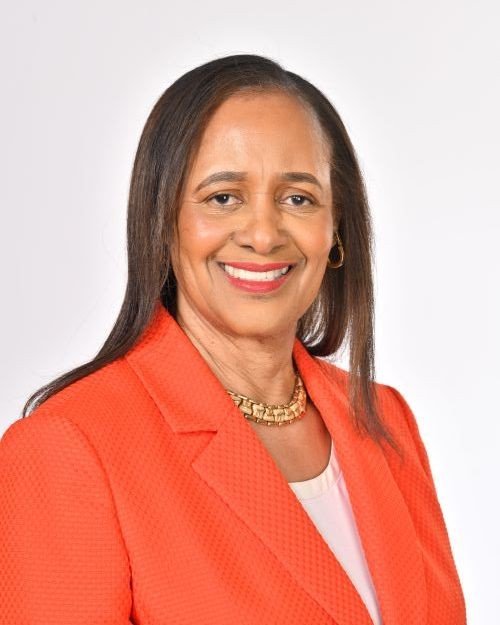
Photo Courtesy: Dr. Mauvareen Beverley