
By: A. Hall, MMB
Every back-to-school season arrives with familiar conversations about test scores, curriculum, staffing and student achievement. This year, however, another question is becoming increasingly difficult for school systems to avoid:
What happens when children enter classrooms shaped for the past while the world outside them is being transformed by artificial intelligence?
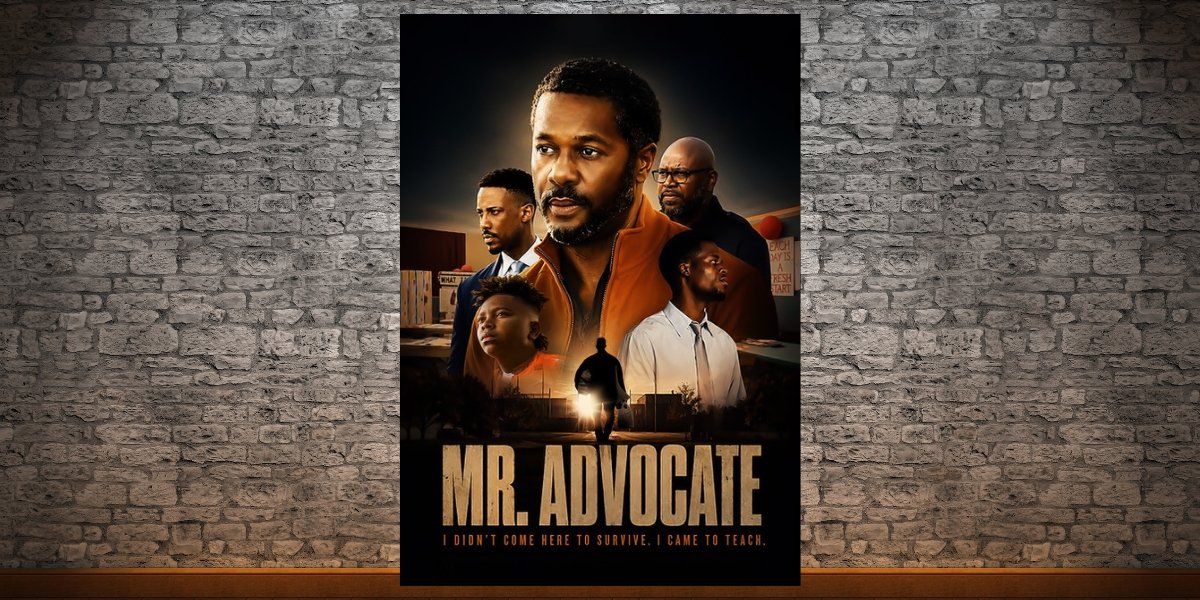
That question sits at the center of MR. ADVOCATE, a new 51-minute drama written, directed and produced by former educator Stacie McClam. Set inside an urban elementary school driven by standardized-test preparation, the film follows Nathan Edwards, a new teacher who introduces his third-grade students to artificial intelligence through a hands-on AI Show. His effort soon collides with a school culture in which innovation is welcomed until it threatens established routines.
While McClam is the visionary behind the project, MR. ADVOCATE is ultimately larger than the story of one filmmaker. It is about the children already growing up inside the AI era, the educators attempting to prepare them and the institutions struggling to determine what meaningful preparation should look like.
Ivan Brings the Student Perspective Into Focus
Among the film’s ensemble is Ivan, a 13-year-old actor, singer and dancer whose creative journey began long before he joined the cast of MR. ADVOCATE.
Ivan recorded his first song at age 4. By age 9, he had become the youngest artist signed to Concord Records and the youngest performer to join Kidz Bop. His work has connected him with professional singers, dancers and musicians across the United States, the United Kingdom and Mexico.
His presence in the film matters for reasons that extend beyond an impressive résumé.
In a story filled with teachers, principals, parents, administrators and competing institutional priorities, Ivan helps keep the audience’s attention on the people school systems are supposed to serve: the students.
Adults often debate technology from the perspective of policy, risk and control. Children experience it differently. For them, AI is not an approaching development. It is already becoming part of how they search for information, create content, communicate and imagine their futures.
Ivan represents a generation that will not have the luxury of deciding whether artificial intelligence should exist. They will need to understand how to use it responsibly, question what it produces and recognize when technology should never replace human judgment.
As students return to school, his role gives MR. ADVOCATE a deeper urgency. The film is not simply asking whether children should use AI. It is asking whether some children will be taught to understand and shape the technology while others are limited to watching it change the world around them.
A Cast That Makes the School System Visible

Ivan is joined by an intergenerational cast that includes Rodney Damon Collins, Conrad Cheeks, BZ Cullins, Andre K. Jefferson, Jere’Miah McGhee, Rapheal Gavin, Arturo Spell and Tehan Davis.
Collectively, the actors bring the school ecosystem to life, not as a simple conflict between one heroic teacher and one resistant administrator, but as a network of people carrying ambitions, responsibilities, grief, professional pressure and personal struggles.
That complexity is one of the film’s strengths.
MR. ADVOCATE does not treat educators as interchangeable authority figures. Its adult characters are human beings working inside a system that can discourage experimentation even when individual teachers and administrators recognize the need for change.
The film also explores the emotional experiences of Black male educators. Beneath the dispute surrounding the AI Show are men coping with grief, depression, burnout and expectations that leave little room for vulnerability. The story suggests that a school cannot meaningfully care for children while ignoring the emotional wellbeing of the adults responsible for them.
AI Is Not the Villain, or the Hero
Artificial intelligence is spreading through American education faster than many school systems can develop clear rules for using it.
A 2025 RAND study found that 54% of surveyed students and 53% of English language arts, math and science teachers were already using AI for school-related purposes. The U.S. Department of Education has also encouraged responsible AI literacy, educator training and the use of technology to support personalized instruction, while emphasizing that AI should not replace the essential role of teachers.
McClam’s film enters the conversation without presenting technology as either a miracle or a menace.
The greater problem in MR. ADVOCATE is institutional resistance. Nathan’s AI Show includes six interactive stations intended to give elementary students an introduction to a technology already reshaping the world. Yet the initiative is threatened because it does not fit neatly within the school’s test-preparation priorities.
The film therefore raises a more difficult question: Can a school system prepare children for the future when its definition of success remains tied almost exclusively to standardized performance?
AI becomes the catalyst, but the real subject is educational purpose.
A Former Teacher Bringing the Conversation Into Daylight

McClam approaches that question through experience rather than abstraction.
Before becoming a filmmaker, she taught in schools in the United States and abroad. Her perspective was also shaped by being bused to schools outside her neighborhood as a child and by the legacy of her grandmother, who taught in segregated Virginia. A law degree later added another lens through which she examines institutional power and accountability.
“I merge advocacy and film to challenge systems that undervalue our children and staff,” McClam explains.
Through her production company, School Dismissed, she is using cinema as a form of civic engagement. MR. ADVOCATE is the first installment of her planned THE SYSTEM Trilogy, which will examine the opportunities and challenges AI presents across elementary, middle and high school environments.
The film’s Bay Area theatrical premiere is scheduled for Aug. 15 at Cinemark Century Hilltop 16 in Richmond, California. University, community and historically Black college and university screenings are also being developed for the fall.
Yet the most important destination for MR. ADVOCATE may not be a theater or festival.
It may be the conversations that happen afterward, among parents, teachers, school leaders and students who recognize that the future of education cannot be discussed without the voices of the children expected to live in it.
About Stacie McClam
Stacie McClam is a former educator, filmmaker and the founder of School Dismissed, a production company using film to examine the systems shaping students and educators. Drawing from her experiences teaching in the United States and abroad, McClam creates stories that explore educational equity, artificial intelligence, mental health and institutional change. MR. ADVOCATE is the first film in her planned THE SYSTEM Trilogy. Learn more at www.MRAdvocateFilm.com.