
The City of Miami Gardens will host a combined “Fourth of July and Juneteenth Experience” at Risco Park on Saturday, July 4, 2026, folding two of the most significant dates on the American calendar into one community celebration. The decision to merge the holidays within a single event arrives as the nation marks its 250th anniversary, a milestone that has prompted institutions and municipalities across the country to revisit what Independence Day means for Black Americans, whose ancestors were excluded from the liberty the Declaration of Independence proclaimed.
Key Takeaways
- Miami Gardens will host a combined “Fourth of July and Juneteenth Experience” at Risco Park on July 4, with gates opening at 4 p.m. and fireworks at 9 p.m.
- Charles Hadley Park in Liberty City hosts the 22nd Annual Fourth of July Family Fest from 4 to 9 p.m., continuing a tradition rooted in one of Miami’s historically Black neighborhoods
- The New York Public Library’s display of Jefferson’s handwritten Declaration of Independence (July 1 through 7) includes the lengthy condemnation of the slave trade that the Continental Congress removed before ratification
- Jefferson enslaved 83 people at the time he wrote the Declaration, according to his own census, a contradiction the NYPL exhibition confronts directly
- The American Lung Association’s 2026 report found that people of color are more than twice as likely as white Americans to live in areas that fail all three major air pollution measures
Miami Gardens Frames Both Holidays as a Single Community Event
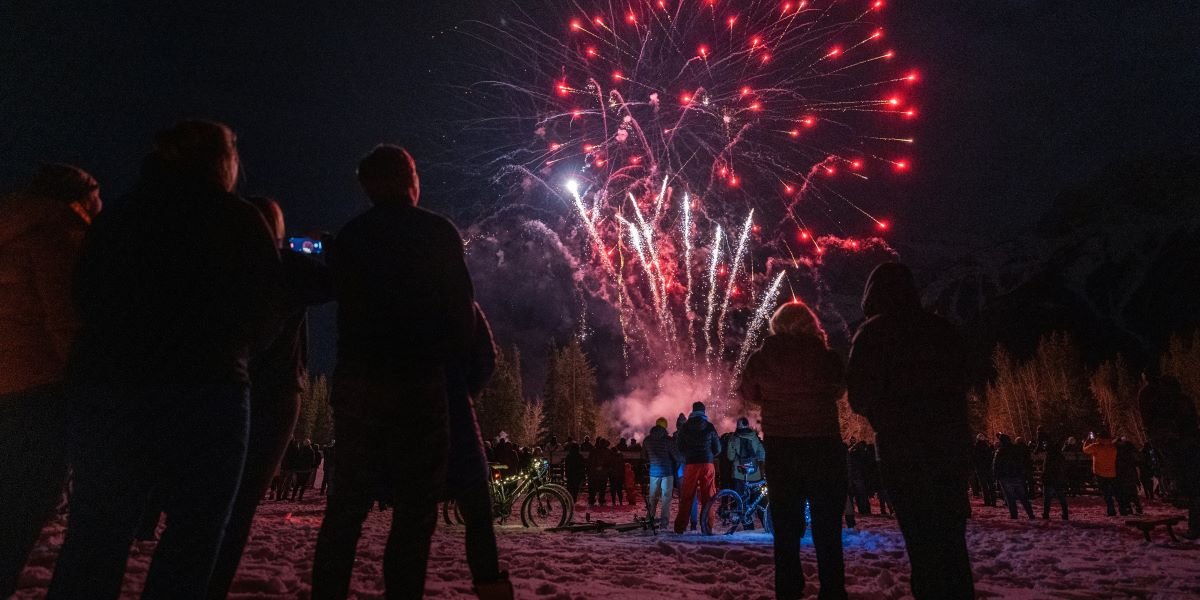
The Miami Gardens celebration at Risco Park, located at 19000 NW 37th Avenue, opens its gates at 4 p.m. and runs through a 9 p.m. fireworks finale. The event includes food trucks, bounce houses, raffles, live entertainment, and family activities, according to CBS Miami. The city did not release a detailed statement explaining the decision to combine Juneteenth and July 4 programming, but the format itself conveys a message: for a municipality that is approximately 72% Black, according to U.S. Census Bureau data, the two holidays are not separate narratives but parts of a single story about American freedom, who was included, and when.
Juneteenth, which became a federal holiday in 2021, commemorates June 19, 1865, the date Union soldiers arrived in Galveston, Texas, to inform enslaved people that they had been freed, more than two years after the Emancipation Proclamation took effect. The gap between the legal end of slavery and its actual enforcement in every state mirrors the broader gap between the Declaration’s language and its application, a tension that the Semiquincentennial has brought into sharper focus across the country.
Charles Hadley Park Continues a 22-Year Tradition in Liberty City
Six miles south of Risco Park, Charles Hadley Park in Miami’s Liberty City neighborhood hosts the 22nd Annual Fourth of July Family Fest from 4 to 9 p.m. at 1350 NW 50th Street. The event includes food, music, fireworks, and rides for children, according to CBS Miami. The annual celebration is organized in partnership with Miami City Commissioner Christine King, who represents District 5, and Miami-Dade County Commissioner Keon Hardemon, who represents District 3.
Charles Hadley Park carries its own layered history. The 28-acre park is named after Charles Hadley, the first Black elected official in the City of Miami. The park has been home to the Liberty City Optimist Club for more than a quarter-century, an institution that has produced more than 50 NCAA Division I athletes and NFL players, including former University of Miami running back Duke Johnson and former NFL wide receiver Chad Johnson, according to the Miami New Times. The park’s amphitheater was once a gathering point for civil rights demonstrations in the 1960s, a history that adds a civic dimension to a family cookout. The 22nd Annual Family Fest is not a new event designed for the Semiquincentennial; it is a longstanding community institution that predates the national commemoration by two decades.
Jefferson’s Handwritten Declaration Reveals the Slave Trade Passage Congress Deleted
In New York, the New York Public Library’s display of Thomas Jefferson’s handwritten “fair copy” of the Declaration of Independence, on view at the Stephen A. Schwarzman Building from July 1 through July 7, presents the founding document in a form that the ratified version deliberately obscured. Jefferson’s draft contained a lengthy condemnation of King George III for perpetuating the transatlantic slave trade. The passage accused the king of waging “cruel war against human nature itself, violating it’s most sacred rights of life & liberty in the persons of a distant people who never offended him, captivating & carrying them into slavery in another hemisphere.”
The Continental Congress removed the passage before ratification on July 4, 1776, to secure votes from delegates in Georgia and South Carolina, whose economies depended on enslaved labor. Jefferson was so frustrated by the excision that he handwrote several copies of his original text, underlining the deleted sections, and sent them to friends. The New York Public Library’s copy is one of only four surviving “fair copies” of the document. The NYPL noted that Jefferson himself enslaved 83 people at the time he composed the Declaration, according to his own census, a contradiction the institution’s companion exhibition, “Declaring America: 1776 and Beyond,” confronts directly. The exhibition, which opened June 15 and runs through January 2027, also features an erasure poem by former U.S. Poet Laureate Tracy K. Smith that reframes the Declaration’s language to evoke the transatlantic voyage of enslaved Africans and the ongoing protests of Black Americans.
Environmental Inequity Adds a Public Health Dimension to Outdoor Celebrations
The American Lung Association’s 2026 “State of the Air” report, which analyzed EPA monitoring data from 2022 through 2024, found that people of color are more than twice as likely as white Americans to live in communities that receive failing grades for ozone, year-round particle pollution, and short-term particle pollution combined. The disparity compounds during summer holidays when millions of Americans, including families in neighborhoods like Liberty City and Miami Gardens, gather outdoors for extended hours.
The heat wave approaching South Florida this week, with heat indices forecast to exceed 100 degrees between July 1 and July 4, makes the environmental dimension of the celebration concrete. Communities that already carry a disproportionate pollution burden face compounded risk when extreme heat accelerates ground-level ozone formation. Miami-Dade County has deployed cooling resources across the county, but the structural gap between neighborhoods with ample tree canopy and air-conditioned public spaces and those without remains a factor that municipal programming alone cannot close.
Philadelphia and Los Angeles Anchor National Celebrations With Black Artists at the Center
The Semiquincentennial’s concert programming also reflects a deliberate effort to center Black artists and cultural traditions. In Philadelphia, the One Philly Unity Concert on the Benjamin Franklin Parkway features Jill Scott, Meek Mill and The Roots, DJ Jazzy Jeff, and Will Smith, all Philadelphia natives, performing in the city where the Declaration was signed. At the Los Angeles Memorial Coliseum, Chaka Khan and Anthony Ramos join Chris Stapleton and The Smashing Pumpkins for America250’s Block Party benefit concert, hosted by Queen Latifah. In Washington D.C., PBS’s “A Capitol Fourth” features Patti LaBelle, Smokey Robinson, Fantasia, and Kool and the Gang alongside the National Symphony Orchestra.
Miami Gardens’ decision to merge Juneteenth and July 4 into one event is not a compromise between two holidays but a statement that the story of American freedom is incomplete without both dates, and that a community celebration in a majority-Black city can hold the full weight of that history on a single summer evening.
Frequently Asked Questions
What is the Miami Gardens Fourth of July and Juneteenth Experience? The City of Miami Gardens is hosting a combined celebration at Risco Park, 19000 NW 37th Avenue, on July 4. Gates open at 4 p.m. and fireworks begin at 9 p.m. The free event includes food trucks, bounce houses, raffles, live entertainment, and family activities.
Where is the Charles Hadley Park Fourth of July Family Fest? The 22nd Annual Fourth of July Family Fest takes place at Charles Hadley Park, 1350 NW 50th Street in Miami’s Liberty City neighborhood, from 4 to 9 p.m. The event includes food, music, fireworks, and children’s rides.
What is different about the Declaration of Independence on display at the New York Public Library? The NYPL’s copy is a “fair copy” handwritten by Thomas Jefferson that includes a lengthy condemnation of the transatlantic slave trade. The Continental Congress removed this passage before ratification to secure votes from Georgia and South Carolina delegates. Jefferson underlined the deleted sections in his copies to preserve his original text.
Why did Jefferson include a condemnation of slavery if he was a slaveholder? Jefferson blamed King George III for imposing the slave trade on the colonies while simultaneously enslaving 83 people himself. The NYPL’s companion exhibition, “Declaring America: 1776 and Beyond,” addresses this contradiction directly through artifacts, documents, and contemporary artistic responses.
How does air quality affect outdoor Fourth of July celebrations in Black communities? The American Lung Association’s 2026 report found that people of color are more than twice as likely to live in areas that fail all three major pollution measures. When extreme heat accelerates ozone formation during summer holidays, communities already carrying disproportionate environmental burdens face compounded health risks during extended outdoor gatherings.