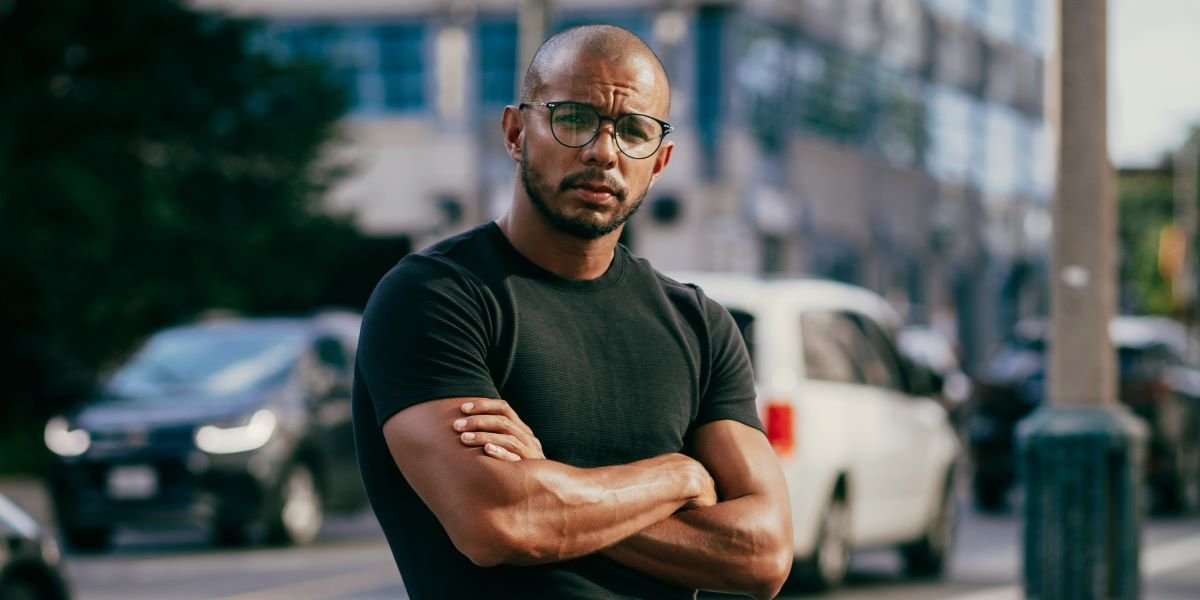


Before Kareem Edwards was handing out chicken sandwiches, he was surviving the collapse of Lehman Brothers.
The Queens-born entrepreneur has lived many lives — Wall Street analyst, Kraft Heinz brand manager, Google tech executive — before landing in Chicago’s South Loop as the first and only Black Chick-fil-A owner-operator in the city. Now five years into running his restaurant at 1101 South Clinton Street, Edwards has made his most significant community investment yet: a $50,000 donation to Just Roots Chicago, a nonprofit urban farming organization working to put fresh, locally grown food directly in the hands of South Side residents who need it most.
The gift is a statement about what Edwards believes business is for.
Rooted in Purpose From the Start
Edwards grew up in Far Rockaway, raised by his mother, a first-generation American with family roots in Trinidad and Tobago. She didn’t raise him to dream — she raised him to be ready. A Posse Foundation scholarship brought him to DePauw University in Indiana, where he studied mathematics and began to discover a gift for leadership. He ran student government, built networks, and met Janelle — the woman who would become his wife, his business partner, and ultimately, the person who pushed him to bet on himself.
After DePauw, Edwards went to New York and started climbing. Wall Street. Then Lehman Brothers, which he navigated through the financial firm’s historic 2008 collapse. By his early thirties, Crain’s Chicago Business had named him one of the city’s inaugural “20 in Their 20s.” On paper, he had arrived. Inside, something was missing.
“I am crushing this industry, even though I’m not happy,” he told Essence. “If I go to business school, I understand even more about business, and then maybe I go down entrepreneurship or find something that I truly like.”
He enrolled at the University of Michigan’s Ross School of Business, graduated in 2015, and joined Kraft Heinz — where he led the breakthrough innovation team responsible for launching Just Crack an Egg, recognized by Nielsen as a top new product. Three years at Google as a senior partner lead in retail followed. But Janelle’s voice kept ringing in his ears. “Since I’ve known you, you talked about owning a restaurant, owning a lounge — you need to do this,” she told him.
The Leap No MBA Prepares You For
Edwards didn’t quit overnight. He spent nights working Chick-fil-A counters after his Google shifts, testing whether the reality matched what he had imagined. He saved money, prayed, and thought it through. “I’m going to be resentful to myself for not taking the chance on me and betting on myself,” he said.
In January 2021 — at the height of a global pandemic — he opened his South Loop location with a team of nearly 100 employees counting on him to hold it together.
What followed required things no MBA program covers. “One day I could be legit the counselor, the father figure, babysitter, semi-doctor,” he said. He built systems, gave his team grace, and kept showing up.
From the start, Edwards made clear his store would be defined by its relationship to the surrounding community. His vendor selections reflect that commitment: his cleaning vendor is a local business owned and operated by two Black women. He has also partnered with several organizations including Howard Brown, which focuses on LGBTQI+ communities of color, for recruiting efforts. Through Chick-fil-A’s Shared Table program, the South Loop location donates surplus food at the end of each shift to the food pantry at St. James Catholic Church, with meals carefully tracked and frozen before delivery. “For me, the goal is to run a successful business but also make an impact in the community,” Edwards said.
A $50,000 Investment in Fresh Food and Future Leaders
The Just Roots Chicago partnership grew the way the best ones do — organically. Edwards first discovered the organization by pulling up to their farm with his kids, looking for fresh produce. Saturday mornings became a ritual: swim lessons, ballet, and then Just Roots, an urban farming nonprofit eight blocks from his store.
Just Roots Chicago leads community farms on the South Side and in the south suburbs. Co-Founder Sean Ruane said everything the organization grows stays within a five-mile radius of the farms. “Really, what we are all about is trying to make sure that the food we’re growing is as fresh as it can be, and it’s staying in the community,” Ruane said.
The organization also provides educational programs including cooking classes, nutritional workshops, and gardening instruction, and launched the Growing Young Leaders program — training future food justice leaders between the ages of 16 and 24.
When a Chick-fil-A corporate grant opportunity arose, Edwards put Just Roots forward. The $50,000 donation — the most substantial investment yet between the two organizations — funds sustainable farming operations, expanded food access, and youth leadership development across the South Side.
Edwards reflected on the partnership publicly, writing: “Partnering with Just Roots to support access to fresh, locally grown food felt like a natural extension of what we believe business can and should do. Just Roots’ commitment to growing food that stays within the community — often just miles from where it’s harvested — is powerful. It’s a reminder that sustainable farming, education, and community-building are deeply connected.”
“It’s a great partnership — an ecosystem within the South Loop and South Side of Chicago,” Edwards said.
A Model Worth Replicating
Kareem Edwards has moved through a lot of rooms — finance, consumer goods, tech, food. His mentors, he says, have mostly been women. Black women, specifically. “Women leadership has been my mentorship, I think, for the most part,” he told Essence — and he has carried that ethos into how he runs his store, his team, and his community partnerships.
He currently serves on DePauw University’s McDermond Center Board of Advisors, mentoring students following a path not unlike his own. His daughters, he notes, still ask when they are going back to the Just Roots farm.
Five years after opening in the middle of a pandemic, Edwards is not measuring success by table turns or quarterly numbers alone. He is measuring it by what grows in the community around him — in the ground, and in the people.